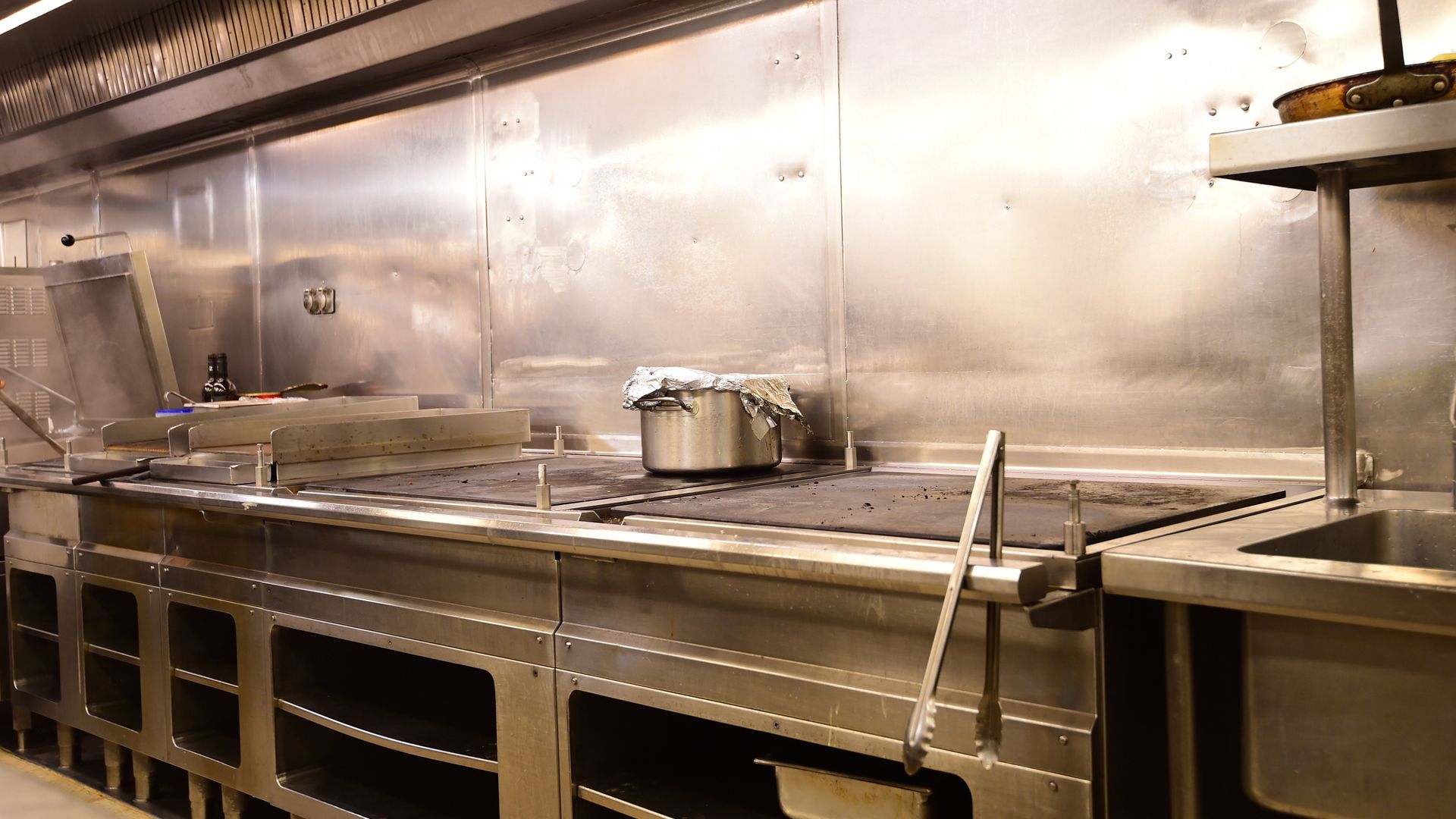
A commercial kitchen splashback is a food safety requirement before it is a design choice. AS 4674-2004 requires splash zone wall surfaces to be smooth, impervious, and cleanable. Stainless steel satisfies all three. Tiled grout does not. A1 Custom Stainless & Kitchens fabricates commercial kitchen splashbacks across Brisbane and South East Queensland. Call 07 3888 7534.
Before choosing a splashback material for a commercial kitchen, it is worth understanding what the law actually requires — because the compliance requirement should be the starting point for the decision, not an afterthought once the tiling is in.
AS 4674-2004 requires wall surfaces in food preparation areas to be smooth, impervious, and capable of being effectively cleaned. The splash zone — the wall surface directly above cooking equipment, prep benches, and sink benches — is the area where these requirements are most strictly applied in a Queensland food premises inspection.
The standard does not mandate stainless steel specifically. It mandates a surface that is smooth, impervious, and cleanable. Stainless steel satisfies all three without qualification. Tiled surfaces with grout joints do not — and understanding why requires understanding what happens to grout in a commercial kitchen environment, which is covered in the comparison section below.
A1 Custom Stainless & Kitchens fabricates commercial kitchen splashbacks across Brisbane, Moreton Bay, Gold Coast, Ipswich, Logan, and the Sunshine Coast. Panels are fabricated in 304 grade for commercial and residential applications and 316 grade for coastal and outdoor environments. Installation is carried out by our own team — no subcontracting. 12-month workmanship warranty on all installations.
Call 07 3888 7534 or contact us to discuss your splashback requirements.
What AS 4674-2004 Requires and What That Means in Practice
Queensland environmental health officers assess splash zone wall surfaces against three criteria drawn from AS 4674-2004: smooth, impervious, and cleanable. A surface that fails any one of these three is grounds for a conditional improvement notice, which requires remediation — in practice, replacement of the splashback with a compliant surface — before the inspection can be closed.
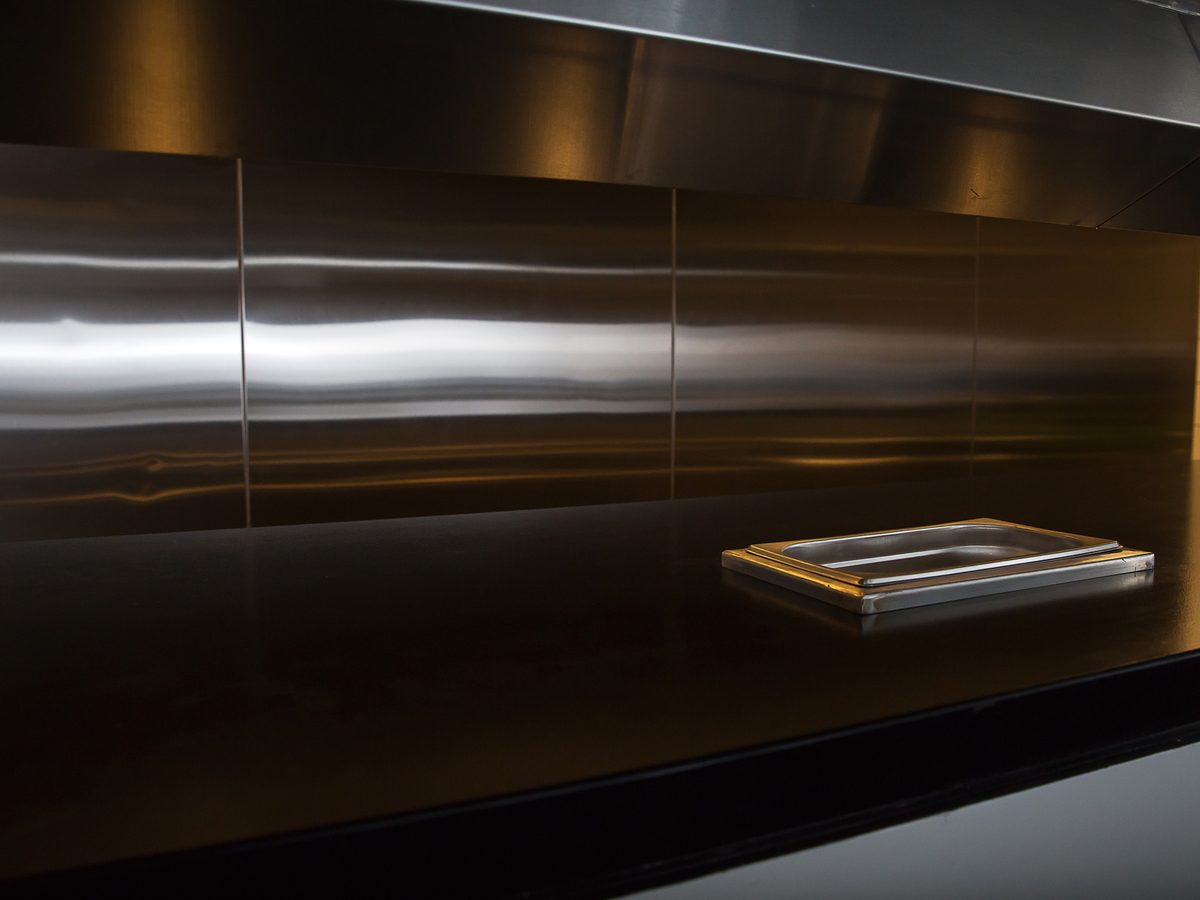
Smooth: no rough texture, no grout ridges, no surface irregularity that traps food waste or resists wiping.
Impervious: non-porous. The surface cannot absorb moisture, grease, or food contamination. A surface that appears clean may still harbour bacteria in pores or joints that cannot be reached by surface wiping.
Cleanable: capable of being brought to a hygienically clean state using normal commercial cleaning methods and chemicals. A surface that degrades under the cleaning chemicals required to keep it hygienic fails this criterion on a long enough timeline.
Stainless steel satisfies all three criteria from day one and maintains that compliance for the life of the kitchen without degradation. If you are planning a full commercial kitchen fit-out and want to understand how the splashback fits alongside your bench and canopy specifications, our custom stainless steel kitchens Brisbane page covers the full scope of what we fabricate as a single commission.
The Direct Material Comparison
| Material | Impervious? | AS 4674-2004 | Maintenance | Durability |
|---|---|---|---|---|
| Stainless Steel | ✓ Yes | ✓ Compliant | Wipe along grain — low | Outlasts tiles and glass in commercial kitchen use |
| Tiles — Cement Grout | ✗ No | ✗ Fails in splash zone | Re-grout every 2–3 years | Tiles durable; grout degrades quickly |
| Tiles — Epoxy Grout | Marginal initially | Borderline — assessed at inspection | Degrades at 4–6 years | Better than cement; not permanent |
| Toughened Glass | ✓ Panel yes | Perimeter seal is risk | Seal replacement 2–3 years | Crack risk from direct impact |
Tiled splashback with cement grout
- Upfront cost: low to moderate.
- Hygiene: cement grout is porous. It absorbs grease, steam, and food contamination that surface wiping cannot remove. Fails the impervious requirement of AS 4674-2004 in a commercial food premises splash zone.
- Maintenance: standard cement grout requires replacement within two to three years under commercial cleaning chemical frequency.
- Compliance risk: documented grounds for a conditional improvement notice in a Queensland food premises inspection.
Tiled splashback with epoxy grout
- Upfront cost: moderate.
- Hygiene: lower initial porosity than cement grout, but degrades under sustained commercial cleaning chemical exposure and high-temperature cycling from cooking equipment. The degradation timeline extends to four to six years in a typical commercial kitchen before the porosity issue returns.
- Compliance risk: lower than cement grout initially. Environmental health officers assess the current condition of the surface at inspection, not its original specification. A degraded epoxy grout surface fails the same AS 4674-2004 criteria as cement grout.
Glass splashback
- Upfront cost: moderate to high.
- Hygiene: the glass panel surface itself is non-porous. The perimeter silicone seal where glass meets the wall or bench surface is the hygiene risk — silicone seals in a commercial kitchen environment typically require replacement every two to three years as they degrade under cleaning chemicals and temperature cycling. A degraded seal harbours bacteria and is a potential inspection failure point.
- Durability: toughened glass is robust but subject to cracking from direct impact — a meaningful risk in a busy commercial kitchen where equipment and pots regularly contact the splash zone.
Stainless steel splashback
- Upfront cost: moderate, with the lowest total cost of ownership of the three options.
- Hygiene: non-porous continuous panel with no grout or perimeter silicone required when installed correctly. Satisfies AS 4674-2004 smooth, impervious, and cleanable requirements from day one without degradation.
- Durability: outlasts tiles and glass in the commercial kitchen splash zone. Does not crack, does not require resealing, does not require re-grouting.
- Compliance risk: lowest of all three options when fabricated and installed correctly.
Environmental health officers assess the current condition of the surface at inspection, not its original specification.
For keeping the surface in top condition once installed, see our how to clean stainless steel guide and how to polish stainless steel guide for the correct routine.
Fabrication, Sizing, and Installation
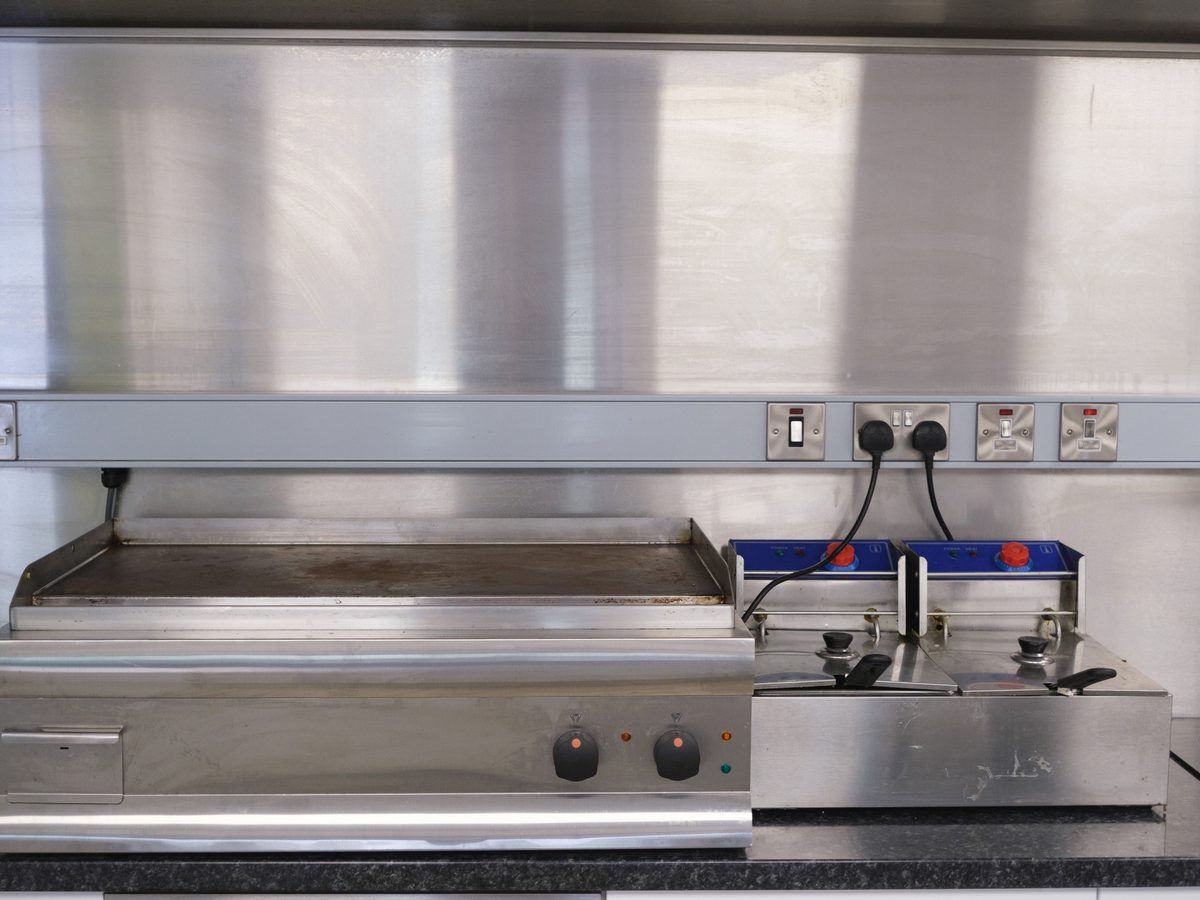
Panel sizing. Panels are fabricated to the confirmed dimensions of your wall surface — width between fixed points, height from bench surface to the underside of the overhead element. No standard sizes. Every panel is cut and finished to your space. Cutouts for power points, light switches, tap outlets, and service penetrations are incorporated into the fabrication from confirmed dimensions collected at the site measure.
Height. Standard commercial splashback height runs from the bench surface to the underside of the overhead element — rangehood, exhaust canopy, or overhead cupboard. Where no overhead element exists, 600mm above bench height is a common reference point, but the correct height is confirmed against your council’s requirements and the environmental health officer’s specification for your premises. Where a commercial exhaust canopy is being fabricated as part of the same scope, the splashback height is coordinated with the canopy installation height so no gap exists between the two elements.
Finish. Brushed (satin) is standard for commercial kitchen applications. Durable, practical, easy to clean along the grain, and consistent with the stainless bench and canopy surfaces in the kitchen. Mirror polish is available where specified.
Integration with bench and canopy. Where the splashback runs above a stainless steel kitchen bench and below a stainless steel exhaust canopy, all three elements are dimensioned from the same site measure and fabricated in the same run. Every surface aligns without gaps, without silicone fills between elements, and without the dimensional inconsistencies that result from separate trades measuring separately.
Residential applications. Stainless steel splashbacks for home kitchens are available in the same grade and finish options as commercial panels. For residential applications, 304 grade brushed finish is the standard specification. A stainless splashback in a home kitchen eliminates all grout maintenance, is more heat-resistant than glass, and will not require replacement for the life of the kitchen. See the full range of what we fabricate on our custom products page.
Frequently Asked Questions
Compliance, material, sizing, and ordering questions answered.
Does a commercial kitchen splashback need to comply with AS 4674-2004?
Yes. AS 4674-2004 requires food preparation area wall surfaces to be smooth, impervious, and capable of being effectively cleaned. Stainless steel satisfies all three criteria. Tiled surfaces with any grout type do not satisfy the impervious and cleanable requirements in the splash zone of a commercial food premises.
Is epoxy grout compliant for a commercial kitchen splashback?
Epoxy grout has lower initial porosity than cement grout but degrades under sustained commercial cleaning chemical exposure and high-temperature cycling. Environmental health officers assess the current condition of the surface at inspection, not its original specification. A degraded epoxy grout surface fails the same AS 4674-2004 criteria as cement grout.
What height should a commercial kitchen splashback be?
From the bench surface to the underside of the overhead element — rangehood, canopy, or overhead cupboard. Where no overhead element is present, 600mm above bench height is a common reference point. The correct height is confirmed against your council’s requirements at the site measure.
Can cutouts for power points and penetrations be included?
Yes. Cutouts for power points, switches, tap outlets, and service penetrations are incorporated into the fabrication from confirmed dimensions collected at the site measure.
Can you fabricate the splashback alongside the bench and canopy as a single scope?
Yes. For full commercial kitchen fit-outs, fabricating the bench, sink bench, splashback, and canopy from one site measure and one fabrication run ensures every element is dimensioned together and installed without gaps or misalignments between surfaces.
What finish is standard for a commercial stainless steel splashback?
Brushed (satin) is the standard commercial specification. Practical, hygienic, easy to clean along the grain, and consistent with the other stainless surfaces in the kitchen.
Free Site Measure — Commercial Splashback
Panel dimensions, height, and cutouts confirmed from your site. Fabricated and installed alongside bench and canopy from one visit.