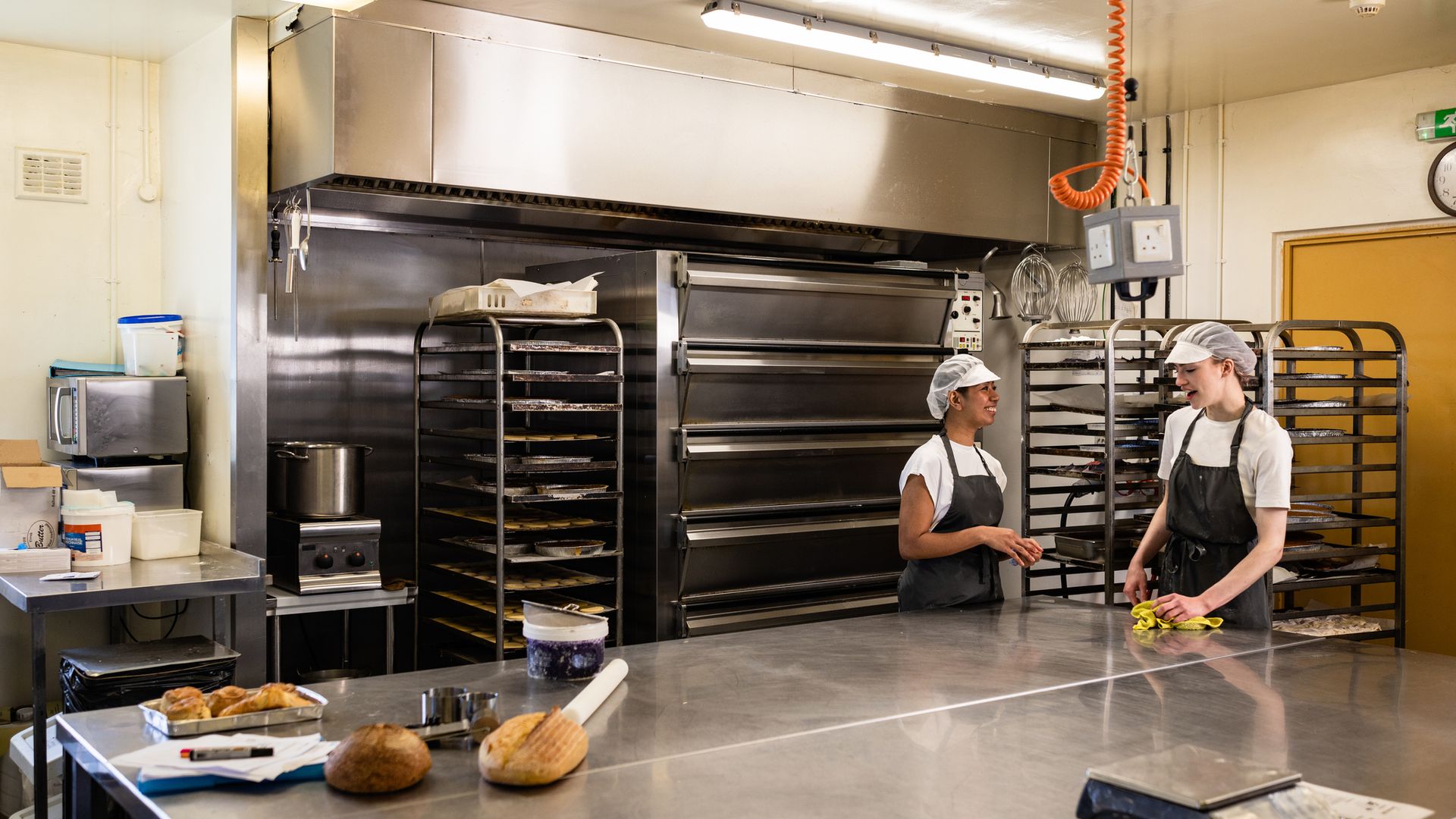
A stainless steel workbench is a different category of equipment to a standard workshop bench — built for food production, trade, and industrial environments where surface hygiene, chemical resistance, and sustained load capacity are non-negotiable. A1 Custom Stainless & Kitchens fabricates stainless workbenches for butchers, bakers, food manufacturers, trade workshops, and laboratories across Brisbane and South East Queensland. Call 07 3888 7534.
A standard workshop bench — timber top, powder-coated steel frame, laminate surface — does the job in a low-to-medium demand environment. In a food production facility, a commercial processing environment, a professional trade workshop, or a laboratory, it fails on every dimension that matters: it is porous, it degrades under cleaning chemicals, it flexes under sustained heavy load, and it requires replacement before the environment it serves has reached its operational life.
A stainless steel workbench is a different category of equipment built for a different category of demand. A1 Custom Stainless & Kitchens fabricates stainless steel workbenches for butchers, food manufacturers, bakers, commercial laundries, trade workshops, and laboratories across Brisbane, Moreton Bay, Gold Coast, Ipswich, Logan, and the Sunshine Coast. Every bench is fabricated to confirmed dimensions in our Burpengary East workshop and installed by our own team.
Call 07 3888 7534 or contact us to discuss your workbench requirements.
Who Actually Needs a Stainless Steel Workbench
Before getting into material properties and configuration options, it is worth being direct about which environments genuinely require stainless steel over a standard workshop bench — because the cost difference is real and the decision should be based on actual need, not assumption.
You need a stainless steel workbench if:
- Food, meat, fish, dairy, or any ingredient that requires a hygienic work surface will be processed on it. A porous surface in this environment is a food safety risk that cleaning cannot eliminate.
- The bench will be cleaned with commercial-grade sanitisers, bleach-based agents, or high-frequency chemical cleaning that degrades timber, laminate, and powder-coat surfaces within a few years.
- The bench will carry fixed heavy equipment — mixers, slicers, grinders, presses — that requires a surface that does not flex under sustained load.
- The environment is a commercial food premises subject to AS 4674-2004 inspection, which requires food contact surfaces to be smooth, non-porous, and fully cleanable.
- The installation is in a coastal Queensland location where salt air exposure makes corrosion resistance a functional requirement, not a preference.
A standard workshop bench is adequate if:
- The work is general assembly, light fabrication, or tool storage in a non-food, non-chemical environment.
- Chemical exposure is minimal and surface hygiene is not a compliance requirement.
- The load is light to moderate and equipment is not permanently fixed to the surface.
If your environment falls in the first category, the rest of this guide is written for you.
Why Stainless Steel Outperforms Every Alternative in Demanding Environments
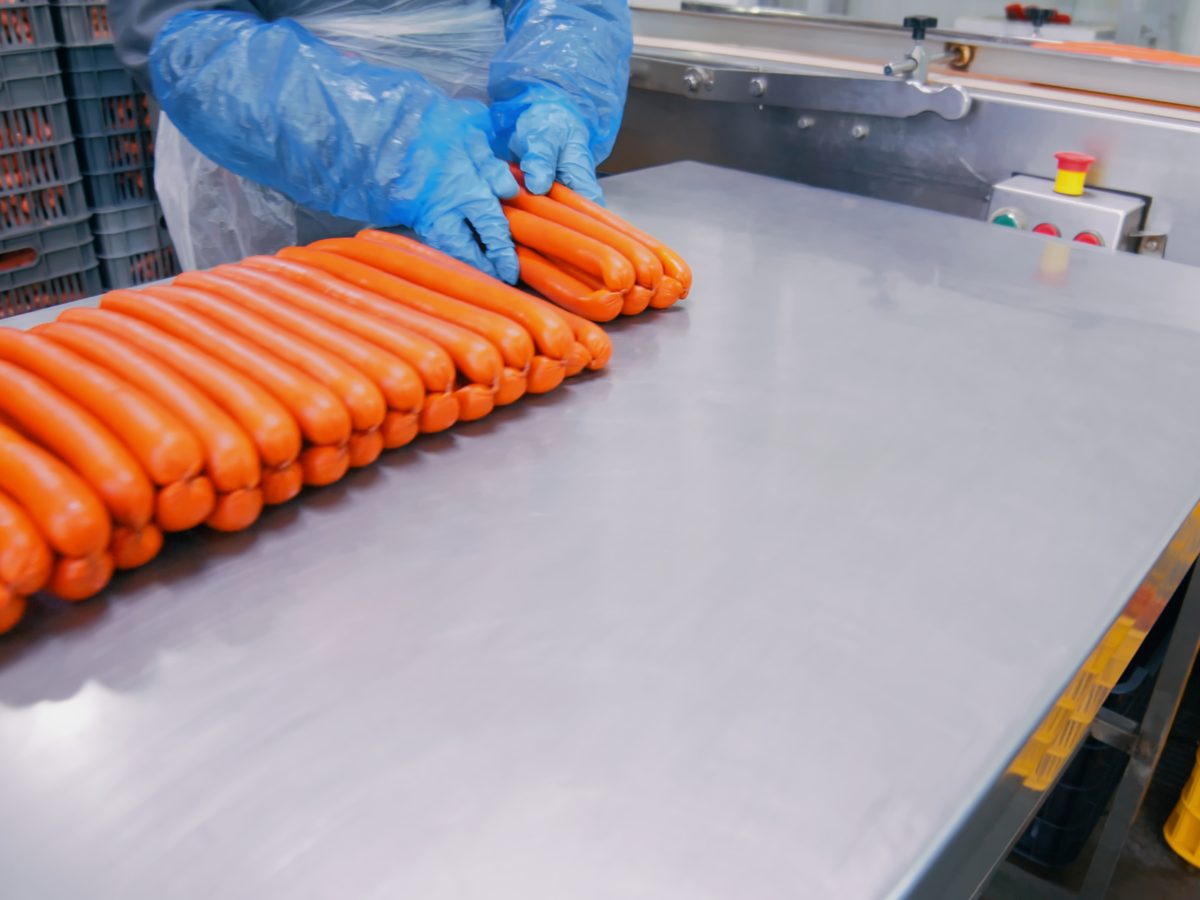
Hygiene. Stainless steel is non-porous. Bacteria, food waste, blood, and contaminants cannot penetrate the surface. Timber absorbs fluids and harbours bacteria after repeated exposure to commercial cleaning agents. Laminate and powder-coat surfaces are similarly compromised once the surface layer is damaged by impact or chemical contact. In any food production or processing environment, a porous work surface is a hygiene risk that cleaning cannot eliminate. A correctly specified stainless surface is one that cleaning can actually address. Our guide on how to maintain stainless steel covers the cleaning and care routine that keeps a fabricated stainless workbench performing across its full working life.
Chemical resistance. Food production environments use cleaning chemicals, sanitisers, and processing agents at frequencies and concentrations that destroy timber and degrade powder-coated finishes within a few years. Grade 304 stainless steel resists all commercial cleaning agents used in food production at normal operating concentrations.
Load capacity. A correctly gauged stainless steel workbench carries loads that would permanently deform a timber or laminate surface. 14-gauge (1.9mm) fabrication handles fixed equipment without flex under operating load. 16-gauge (1.5mm) handles standard working loads across the surface. Gauge is confirmed against your intended use before fabrication begins.
Total cost of ownership. Timber, laminate, and powder-coat workbenches in demanding environments typically require replacement every three to five years. A correctly specified stainless workbench fabricated to 16 or 14-gauge will outlast these alternatives by a substantial margin, making the cost per year of ownership across a 15 to 20-year working life significantly lower despite the higher upfront fabrication cost.
For a detailed comparison of stainless steel against carbon steel alternatives — particularly relevant for trade workshop environments — see our carbon steel vs stainless steel guide.
Grade Selection: 304 vs 316
304 grade is the correct specification for the majority of stainless steel workbench applications: food production facilities, bakeries, butchers, commercial kitchens, trade workshops, and laboratory environments not involving halide compounds. 304 meets AS 4674-2004 for food contact surfaces and resists all standard commercial cleaning agents at normal operating concentrations.
316 grade is the correct specification for environments where high-chloride chemicals are regularly in contact with the bench surface, seafood and smallgoods processing environments, outdoor workshop installations in coastal Queensland locations, and specific laboratory applications. The molybdenum content in 316 provides chloride corrosion resistance that 304 does not offer.
For the full grade chemistry and application breakdown, see our 304 vs 316 stainless steel guide.
Configuration Options
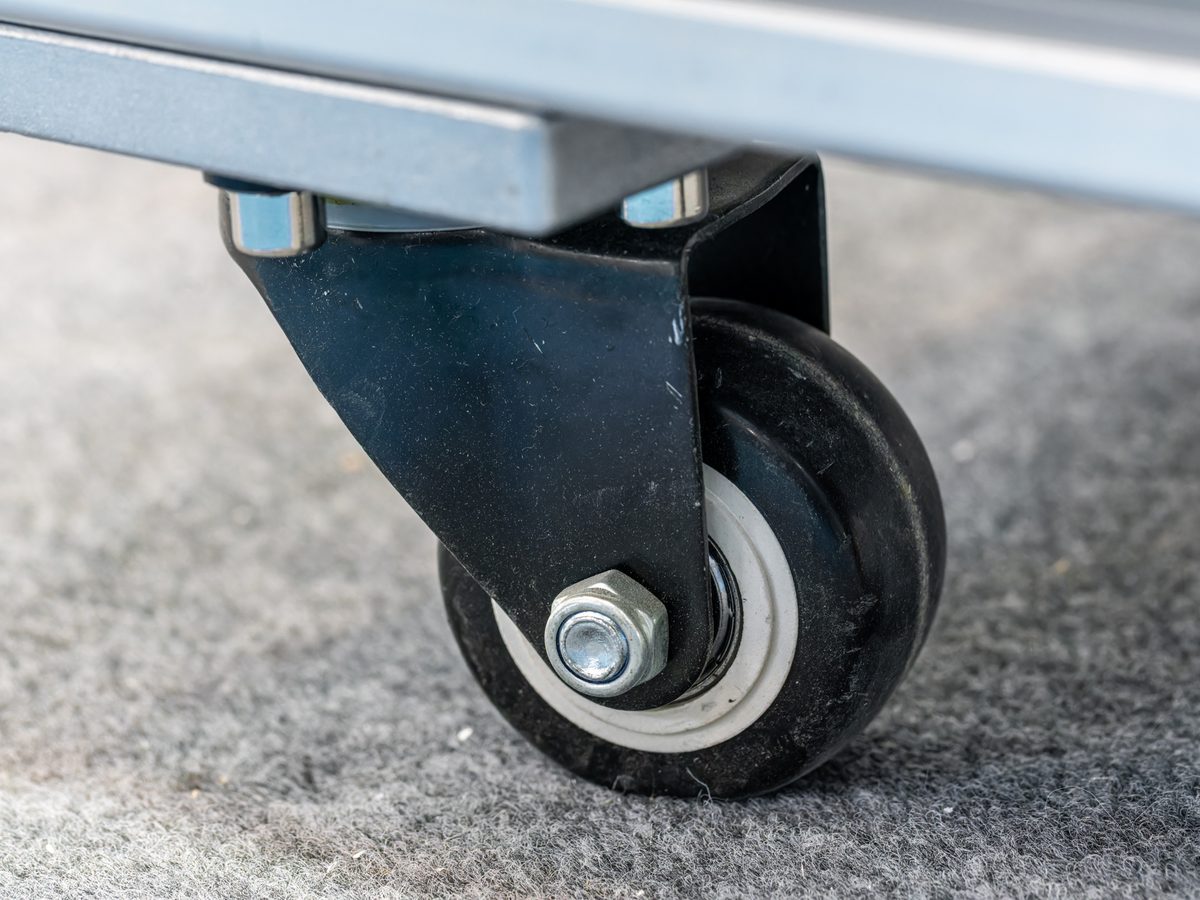
Leg options. Fixed bolt-down legs for permanent installations. Adjustable-height legs for environments where the bench height needs to suit different operators or tasks across shifts. Castors — fixed swivel, directional, or swivel with brakes — for benches that need to be repositioned during the working day. Castors are fabricated into the leg structure at manufacture, not retrofitted to an existing leg configuration.
Undershelf. A welded undershelf increases usable capacity and provides storage without requiring a separate unit. Undershelf height is confirmed against what needs to be stored beneath — bins, ingredient containers, equipment, or open floor clearance for cleaning access.
Stainless steel shelving. Wall-mounted stainless shelving is frequently commissioned from the same site measure as the workbench, ensuring mounting heights and shelf depths are consistent across the installation. Fabricating benching and shelving together produces a fit-out that reads as a designed installation rather than a collection of individually ordered components.
Surface finish. Brushed (satin) finish is standard for food production, processing, and trade workshop environments. It is durable, hygienic, easy to clean along the grain, and does not show light surface marks the way a mirror polish does. Mirror finish is available where specified.
Dimensions. Standard workbench depth for most applications is 600mm to 750mm. Height is confirmed at the site measure against your operational environment and operator heights. Standard commercial bench height is 900mm. Pastry operations commonly specify 870mm. Packaging lines and specific laboratory environments frequently require non-standard heights, all fabricated to your confirmed requirement.
Industry Applications
Butchers and smallgoods producers
Boning, portioning, and processing requires a surface that does not absorb blood or fat, can be sanitised between product lines, and handles sustained heavy cutting work. 304 grade is standard. 316 is specified for coastal facilities or operations using high-chloride sanitiser agents.
Bakers and pastry operations
Pastry workbench height is typically specified at 870mm rather than 900mm to support rolling and hand-kneading. This is confirmed at the design stage alongside any integration with proving racks or shelving above the bench.
Food manufacturers and production lines
Bench runs of any length configured to the production layout, with integration of stainless steel shelving, wall-mounted storage, and sink benches from the same fabrication scope. Food contact surface requirements, leg configuration for floor-cleaning clearance, and drainage considerations are all addressed at the site measure.
Trade and fabrication workshops
A heavy-duty stainless work bench for a welding bay, fabrication shop, or automotive workshop carries heavy tooling and equipment loads without surface damage from heat, impact, or chemical exposure in a way that a timber-topped bench will not sustain.
Laboratories
Fixed laboratory benches in 304 or 316 grade depending on the chemical environment. Under-bench clearance confirmed against equipment and storage dimensions. Surface finish and edge profile confirmed against your laboratory specification.
For the full range of custom stainless steel products we fabricate alongside workbenches — including sink benches, shelving, and kitchen benches — see our custom products page and stainless steel benches Brisbane page.
Frequently Asked Questions
Gauge, configuration, food safety compliance, and ordering questions answered.
What gauge do I need for a stainless steel workbench?
16-gauge (1.5mm) handles standard working loads. 14-gauge (1.9mm) is specified where fixed heavy equipment will sit permanently on the surface. 18-gauge is only appropriate for low-demand shelving. Gauge is confirmed at the design stage on every job.
Can I get a workbench with castors?
Yes. Castors are fabricated into the leg structure. We specify fixed swivel, directional, or swivel with brakes depending on your requirement and floor surface. Castors are not retrofitted to an existing leg configuration.
Can stainless steel shelving be fabricated at the same time as the workbench?
Yes, and we recommend it. Fabricating from the same site measure ensures mounting heights, shelf depths, and overall installation dimensions are consistent across the fit-out.
Is a stainless steel workbench the same as a stainless steel kitchen bench?
The core fabrication approach is the same — both are welded stainless steel structures built to confirmed dimensions in the same workshop. The differences are in gauge selection, leg configuration, under-bench clearance requirements, and whether an integrated sink is required. Both can be commissioned from the same site measure if your project requires both.
Do you fabricate food production workbenches to AS 4674-2004?
Yes. Where the workbench is a food contact surface in a commercial food premises, we fabricate to AS 4674-2004 standard: non-porous surface, fully welded construction, no joins that cannot be cleaned to the standard required by an environmental health inspection.
Discuss Your Workbench Requirements
Gauge, leg configuration, grade, and dimensions confirmed from a site measure. Brisbane and South East Queensland.