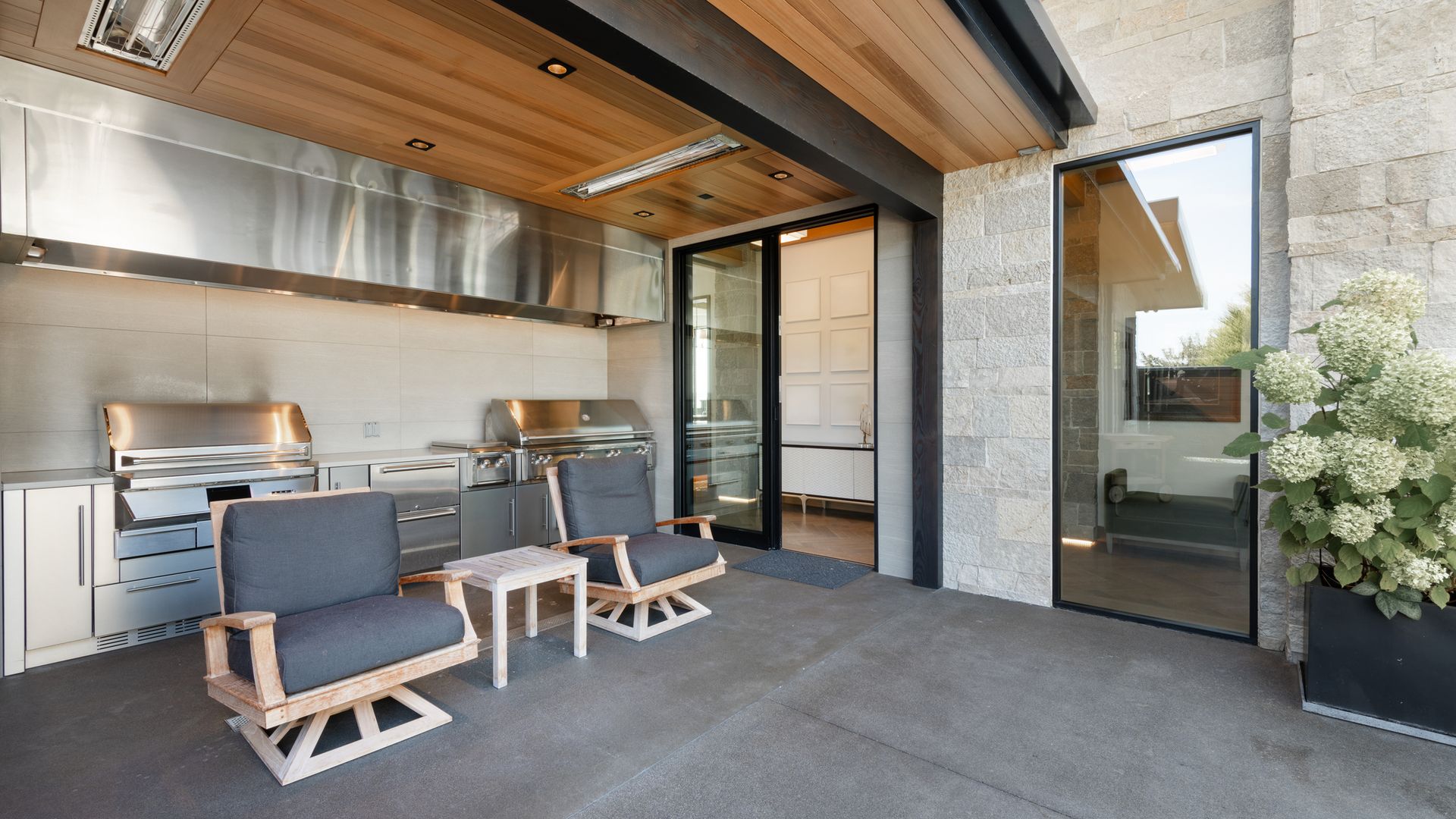
Most outdoor kitchen builds that fail within five years fail because of the wrong bench surface material. Stainless steel in the correct grade is the only bench material that performs correctly outdoors in the Queensland climate for the life of the installation. A1 Custom Stainless & Kitchens fabricates outdoor kitchen benches, BBQ surrounds, and sink benches across Brisbane, Gold Coast, Sunshine Coast, Ipswich, Logan, and Moreton Bay. Call 07 3888 7534.
An outdoor or alfresco kitchen in South East Queensland is not a seasonal installation. It is a year-round structure exposed to UV, high humidity, salt air in coastal locations, and temperature cycling that destroys materials not selected for that environment. Most outdoor kitchen builds that fail within five years fail because of one decision made incorrectly at the start: the wrong bench surface material.
Timber warps and rots. Powder-coated steel frames rust at any point where the coating is nicked or scratched, and in a coastal environment that process begins within the first wet season. Many engineered stone manufacturers void their warranties for outdoor installation due to UV degradation and thermal shock from cooking equipment heat. Laminate panels delaminate in sustained humidity. Stainless steel in the correct grade does none of these things. It is the only bench surface material that performs correctly outdoors in the Queensland climate for the life of the installation.
A1 Custom Stainless & Kitchens fabricates custom stainless steel outdoor kitchen benches, sink benches, and BBQ surrounds for alfresco builds across Brisbane, Gold Coast, Sunshine Coast, Ipswich, Logan, and Moreton Bay. Every bench is fabricated to confirmed dimensions at our Burpengary East workshop and installed by our own team.
Call 07 3888 7534 or request a free site measure and written quote.
Why Most Outdoor Kitchens Fail Within Five Years
The outdoor kitchen build failure rate is high in Queensland because material decisions are made on appearance rather than performance. Here is what actually happens to each alternative in the Queensland outdoor environment.
Timber looks good in the first season. Queensland’s humidity and rain cycles then begin their work. Timber absorbs moisture, swells, dries, cracks, and eventually rots regardless of what finish is applied. Oiling slows the process. It does not stop it. Most timber outdoor kitchen benches require replacement within three to five years.
Concrete is durable but requires sealing, stains without regular maintenance, and cracks under the thermal cycling caused by direct sun exposure and cooking equipment heat. Repairing a cracked outdoor concrete benchtop is not a minor job.
Engineered stone performs well indoors in controlled environments. Outdoors in direct Queensland sun it is subject to UV degradation and thermal shock from the heat generated by cooking equipment directly adjacent. Many manufacturers explicitly void their warranties for outdoor installation. Our stainless steel vs stone vs laminate guide covers the full material comparison in detail including hygiene performance, heat resistance, and lifespan.
Powder-coated steel frames are a structural failure mode rather than a bench surface issue, but worth noting: any nick or scratch in the coating — from kitchen activity, equipment movement, or installation — creates a corrosion initiation point. In a coastal environment, that point begins to rust within the first wet season.
Stainless steel does not warp, does not absorb moisture, does not crack under thermal cycling, resists UV, and handles direct BBQ heat without damage. In the correct grade for the location, it will outlast the structure it sits in.
The Grade Decision: Getting This Wrong Is Expensive
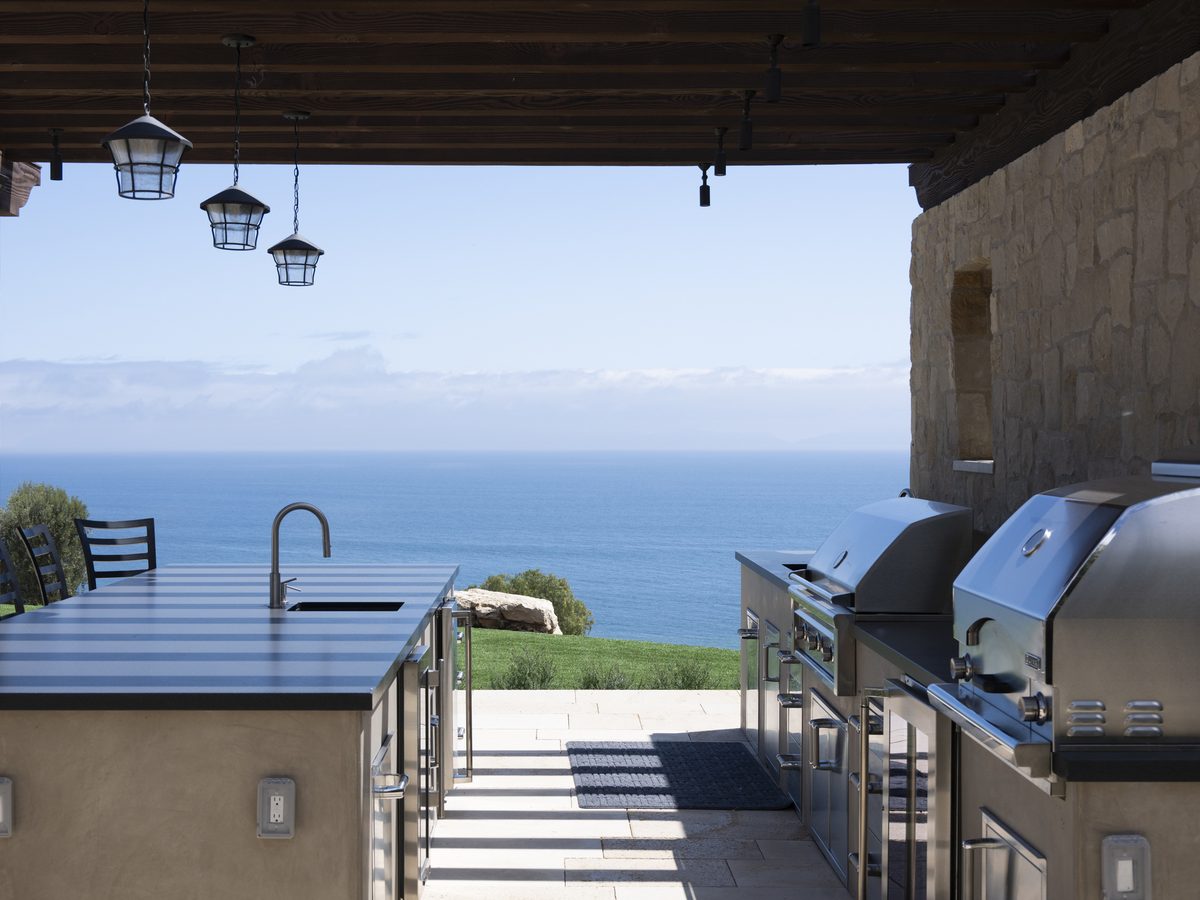
304 grade is the correct specification for outdoor kitchen benches in inland Queensland locations with low ambient humidity, no salt air exposure, and where chlorine-based pool or cleaning chemicals will not regularly contact the bench surface.
316 grade is the correct specification for any outdoor kitchen bench within practical proximity to the coast — as a working guide, any location where salt air is detectable on a windy day — and any installation where a saltwater pool, spa, or chlorine-cleaning routine brings chloride into regular contact with the bench surface. Individual site conditions including wind direction, direct coastal exposure, and distance from the water all affect the specification. Grade is confirmed at the site measure, not assumed from a postcode.
The chemistry is the molybdenum content in 316, which gives it substantially higher resistance to chloride-induced pitting corrosion that 304 does not have. On a Gold Coast or Sunshine Coast outdoor bench, 304 will develop surface pitting within two to three years. 316 will not. The cost difference between the grades across a full outdoor kitchen bench scope is a fraction of the cost of replacement.
For the full chemistry breakdown and application guide, see our 304 vs 316 stainless steel guide.
Planning the Layout: Four Decisions to Make Before Anything Is Built
BBQ, burner, pizza oven. Confirm equipment dimensions before bench is designed.
Bench surface, sink bench. Sink rough-in required before structure is tiled or rendered.
Pass-through at 900mm or raised bar at 1050–1100mm, incorporated into the same bench run.
- 1
Separate your three zones
A functional outdoor BBQ kitchen separates the cooking zone — built-in BBQ, burner, smoker, pizza oven — from the prep zone (bench surface, sink) and the serving zone (pass-through surface, bar area). These zones should flow in one direction: prep to cook to serve. Requiring the cook to cross back through the kitchen during service is a layout failure. The same workflow logic applies to a custom commercial kitchen fitout and it matters equally in a residential alfresco build.
- 2
Confirm your cooking equipment first
The bench run, cutout dimensions, side clearances, and surrounding bench depth are all determined by your cooking equipment. A built-in BBQ requires a specific cutout to the manufacturer’s specification. Confirm the equipment before the bench is designed, not after.
- 3
Decide on a sink before any building work begins
An outdoor kitchen sink requires a plumbing rough-in before the structure is tiled or rendered. If the decision to include a sink is made after the structure is complete, the plumbing becomes significantly more disruptive and expensive. Most people who build an outdoor kitchen without a sink add one in a subsequent renovation. Build it in once.
- 4
Confirm the available bench run
Standard outdoor kitchen bench depth is 600mm to 650mm, which accommodates most built-in BBQ units and leaves workable bench space on either side. Bench run length is determined by your alfresco structure width. Confirm this before anything is fabricated.
What to Include in Your Outdoor Kitchen Build
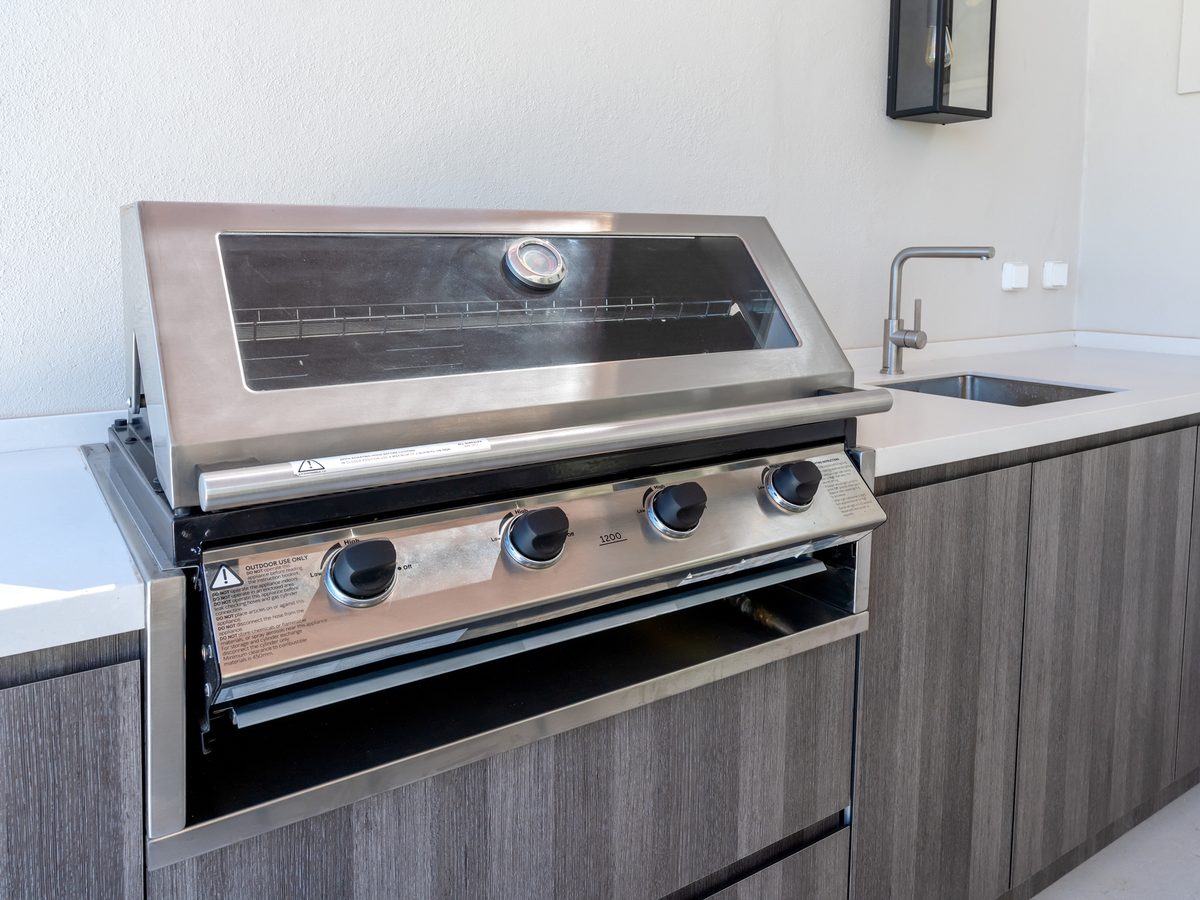
Built-in BBQ surround. The bench is fabricated with a cutout to your BBQ unit’s confirmed dimensions, with the correct clearances for heat and ventilation on each side. The stainless bench runs on either side provide the prep and serving surface that makes the outdoor kitchen genuinely functional.
Integrated sink bench. A stainless steel sink bench in 316 grade for coastal and high-humidity locations, fabricated as a single welded unit — no drop-in bowl, no perimeter seal that degrades outdoors, no join that works loose under weather exposure. See our stainless steel benches Brisbane page for the full range of sink bench configurations we fabricate.
Under-bench storage. Open under-bench space for a bar fridge, wine fridge, or storage. Enclosed stainless steel door panels where weather protection for stored items is required.
Serving bench or bar section. A pass-through surface at 900mm for serving from the kitchen side, or a raised bar section at 1050mm to 1100mm for outdoor seating. Both can be incorporated into the same bench run.
Stainless steel splashback. A stainless splashback behind the cooking area protects the wall surface from grease, heat, and cleaning chemicals. In a coastal outdoor environment it also eliminates the grout maintenance issues that affect tiled splashbacks exposed to the same salt air as the bench surface. See our custom stainless steel products page for fabrication options.
Maintaining Your Outdoor Stainless Steel Bench
Stainless steel requires less maintenance than any alternative outdoor bench material. It is not zero maintenance.
Maintenance routine for outdoor stainless steel
After each use: wipe the bench surface with a damp microfibre cloth while still warm. Grease removed from a warm surface comes off cleanly. Grease left to cool and set requires more effort and, if left repeatedly, dulls the surface finish over time.
Weekly: wipe along the grain with a soft cloth and a mild stainless steel cleaner or warm soapy water. Never use steel wool, abrasive scouring pads, or any product containing bleach directly on the bench surface. These scratch the grain and create microscopic sites where surface oxidation initiates.
Monthly in coastal environments: apply a food-safe stainless steel protectant spray or a light coat of food-grade mineral oil along the grain and buff off with a clean cloth. This maintains the surface finish and slows gradual dulling from UV and salt air exposure.
For the full cleaning and care routine, see our how to clean stainless steel guide and how to polish stainless steel guide.
Frequently Asked Questions
Material selection, grade, sizing, and ordering questions for Queensland outdoor kitchen builds.
What is the best bench material for an outdoor kitchen in Queensland?
Stainless steel in the correct grade for the location. 304 for inland locations with no salt air or chloride exposure. 316 for coastal locations, high-humidity environments, and anywhere a pool or spa means chloride regularly contacts the bench surface.
Should I use 304 or 316 for a Gold Coast or Sunshine Coast outdoor kitchen?
316 is the correct specification. 304 develops chloride pitting in a salt-air environment within two to three years. The cost difference between the grades is small relative to the cost of replacement.
Can the bench cutout be fabricated to my specific BBQ unit dimensions?
Yes. The cutout is fabricated to the confirmed dimensions of your BBQ unit including the required clearances for heat and ventilation. Equipment dimensions are confirmed at the site measure stage.
Can I get a sink included in the outdoor kitchen bench?
Yes. We fabricate outdoor sink benches as a single welded unit in 316 grade. The bowl, drain board, and tap holes are all incorporated into the fabrication — no drop-in bowl, no perimeter seal.
Do you fabricate the stainless components if a builder is handling the structure?
Yes. We fabricate the bench tops, sink bench, splashback panels, and BBQ surround to confirmed dimensions. Installation into the structure is then carried out by our own team or coordinated with the builder on site.
What is the lead time for an outdoor kitchen bench?
From drawing approval to completed installation is typically two to three weeks for a standard scope. Complex configurations or simultaneous bench and splashback commissions are confirmed at the quote stage.
Free Site Measure — Outdoor Kitchen Bench
Grade, BBQ cutout, and sink position confirmed at the site visit. Brisbane, Gold Coast, Sunshine Coast, Ipswich, Logan, and Moreton Bay.