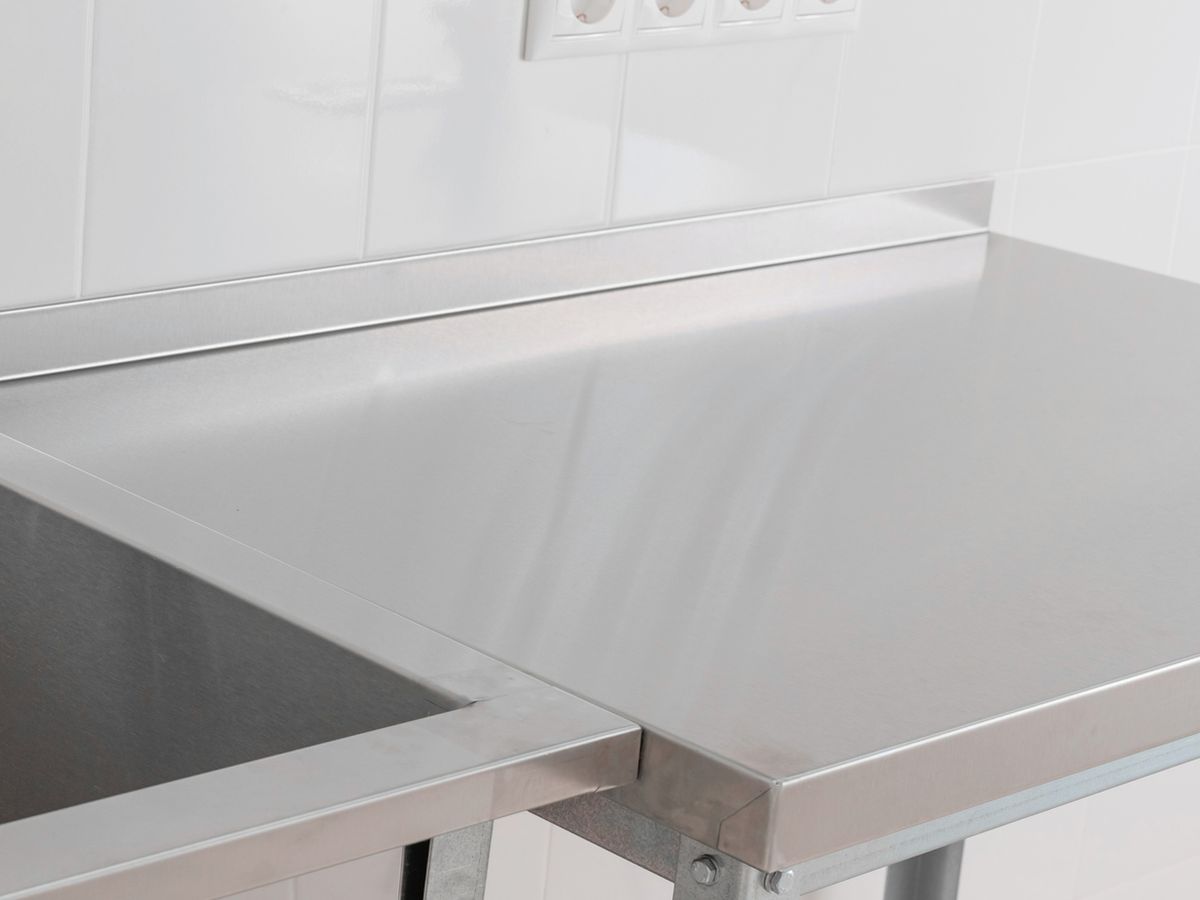
Brushed stainless is the default in a working kitchen because it disguises fine scratching, can be re-grained after a repair, and gives you a direction to wipe along. The finish is a separate decision from grade and thickness, and it is the one people notice daily.
Mill Finishes vs Fabricated Finishes
Two vocabularies, which is where the confusion starts. Mill finishes are named by code: 2B is the standard cold rolled, pickled finish, and BA is bright annealed, brighter and smoother. Fabricated finishes are produced afterwards by grinding or polishing and named by appearance: No.4 is a polished directional grain, No.8 is mirror, and what the trade calls brushed or satin is a finer directional grain.
| Finish | Produced | Appearance | Typical use |
|---|---|---|---|
| 2B | Mill | Dull, smooth | Base sheet before graining |
| BA | Mill | Bright, smooth | Feature surfaces |
| No.4 | Fabricated | Directional grain | Commercial benches |
| No.8 | Fabricated | Mirror, no grain | Decorative panels |
Which Finish Should a Working Kitchen Use?
A fine directional grain. It survives ordinary use without looking tired, and it is repairable.
The alternatives are worth understanding rather than dismissing. Mirror marks with every touch and cannot be repaired invisibly, because any local abrasion changes the reflection. A very coarse grain traps material in the grain itself. A smooth 2B surface shows every mark because there is no grain to disguise it. The grain is doing real work.
Fine directional grain
- Disguises fine scratching
- Can be re-grained after repair
- Gives a wiping direction
- Hides sheet joints on splashbacks
Mirror and bright annealed
- Every mark and wipe shows
- Repair is rarely invisible
- High glare under kitchen lighting
- Reasonable for out of use features
Does the Finish Change How It Is Cleaned?
Yes, in a way that costs nothing to act on: wipe along the grain, not across it. Wiping across pushes residue into the grooves and leaves streaks. That single instruction is the most useful thing to hand a kitchen hand, and it is why our stainless steel cleaning guide starts with direction before it starts with product.
Can a Damaged Finish Be Repaired?
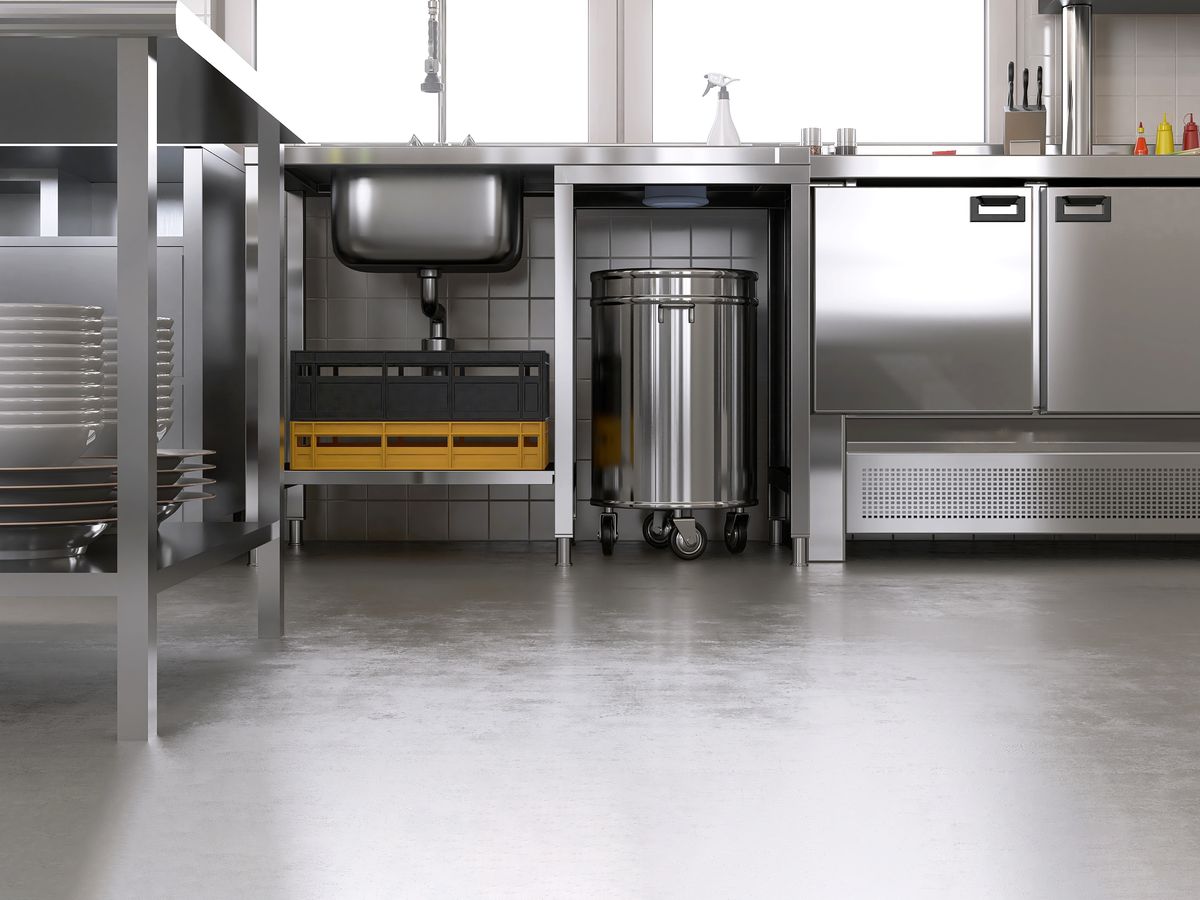
On a grained surface, usually and often invisibly, by re-graining the affected area in the same direction. On a mirror, rarely. This is the practical argument for grained finishes in high-use areas, and it is why the method in our scratch removal guide works on a bench and not on a polished panel.
Where a surface needs restoring rather than repairing, polishing stainless steel is the process, and working against the original grain makes a small defect visible across a much larger area.
Grain is also a separate decision from gauge. Two benches at the same thickness can look completely different.
What Is a Living Finish?
One designed to change with use. The term belongs to brass and copper, where the surface oxidises into a patina. Lacquered brass holds bright until the coating wears; unlacquered changes from day one. Stainless does not behave this way, which is part of why it is specified in working areas. Our brass and copper guide covers how those metals behave and where they should not be used.
How is a finish matched to existing equipment? From a physical sample, not a description. Two suppliers both calling a surface brushed can produce visibly different grains, and on a run that meets existing equipment the mismatch shows. Grain is also a separate decision from benchtop thickness and gauge, which gets confused with it constantly.
Frequently Asked Questions
Is brushed the same as satin?
Broadly, in trade use. Both are a fine directional grain, and coarseness should be specified rather than assumed.
What is No.4?
A polished directional grain produced after the mill, and the finish most commercial benches are supplied in.
Does brushing hide scratches?
It disguises fine scratching far better than a mirror, and it can be re-grained after a repair.
Is mirror harder to clean?
Not harder, less forgiving. Every mark shows between cleans.
Can stainless have no grain?
Yes, mirror or bright annealed. Poor for a working top, reasonable for a feature surface out of use.
Best finish for a splashback?
A fine grain, which also hides sheet joints better than mirror. See our commercial kitchen splashback comparison.
Book a Site Measure
Finish and grain direction are confirmed at a measure so the new work matches the room. We fabricate custom stainless steel benches at our Burpengary East workshop in any grained finish. Call 07 3888 7534.
Match a Finish to Your Kitchen
Bring a sample of the existing surface and we will grain the new work to match it.