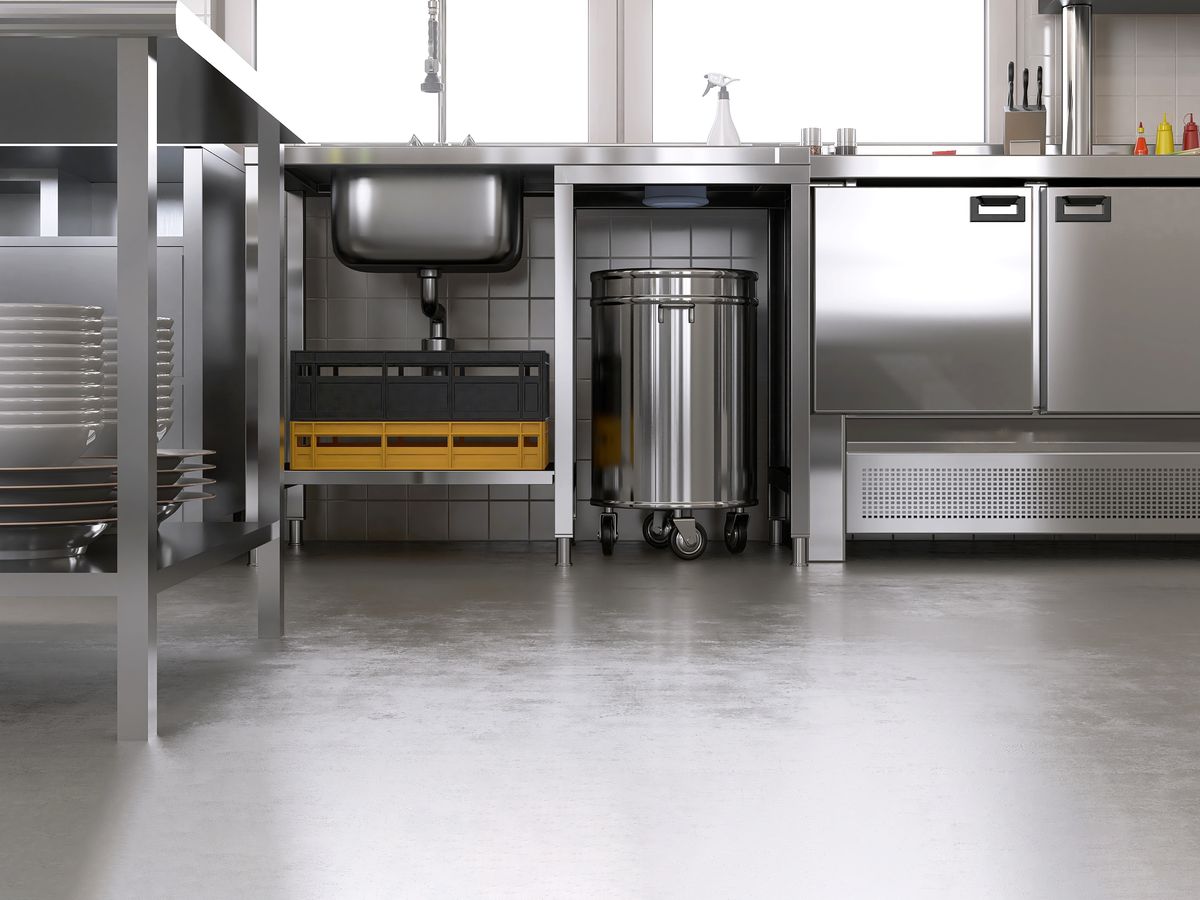
The sink decision in a commercial kitchen is three decisions: how many bowls and which way the drainer faces, whether it is welded in or dropped in, and whether the hand wash basin is separate. That last one is a compliance requirement rather than a preference, and it is the one most often discovered too late.
How Many Bowls, and Which Way Does the Drainer Face?
Driven by process rather than by space. A single bowl with a drainer suits a small prep area; a double or triple bowl suits a wash, rinse and sanitise sequence. The drainer side is decided by where the operator stands, and getting it wrong means every service includes a reach across a wet bowl.
| Configuration | Suits | Watch for |
|---|---|---|
| Single bowl with drainer | Small prep area, low covers | Drainer side relative to the operator |
| Double bowl | General wash and rinse | Bowl sizes, not just count |
| Three compartment | Wash, rinse, sanitise | Bowl depth and total bench run |
| Pot wash | Pots and trays by the cook line | Depth and access for a stock pot |
Why Must the Hand Wash Basin Be Separate?
Because it is a dedicated facility for washing hands and cannot double as a food preparation or equipment washing sink. It needs its own taps, and it needs to be positioned so using it does not require walking through a working area with contaminated hands. This is settled early in a fitout because it changes the bench layout, and the requirement sits within the standards governing food premises fabrication, which our AS 4674-2004 guide covers.
A hand wash basin is not a second sink. If it can be reached past a stack of dirty trays, it will not be used.
Undermount or Top Mount?
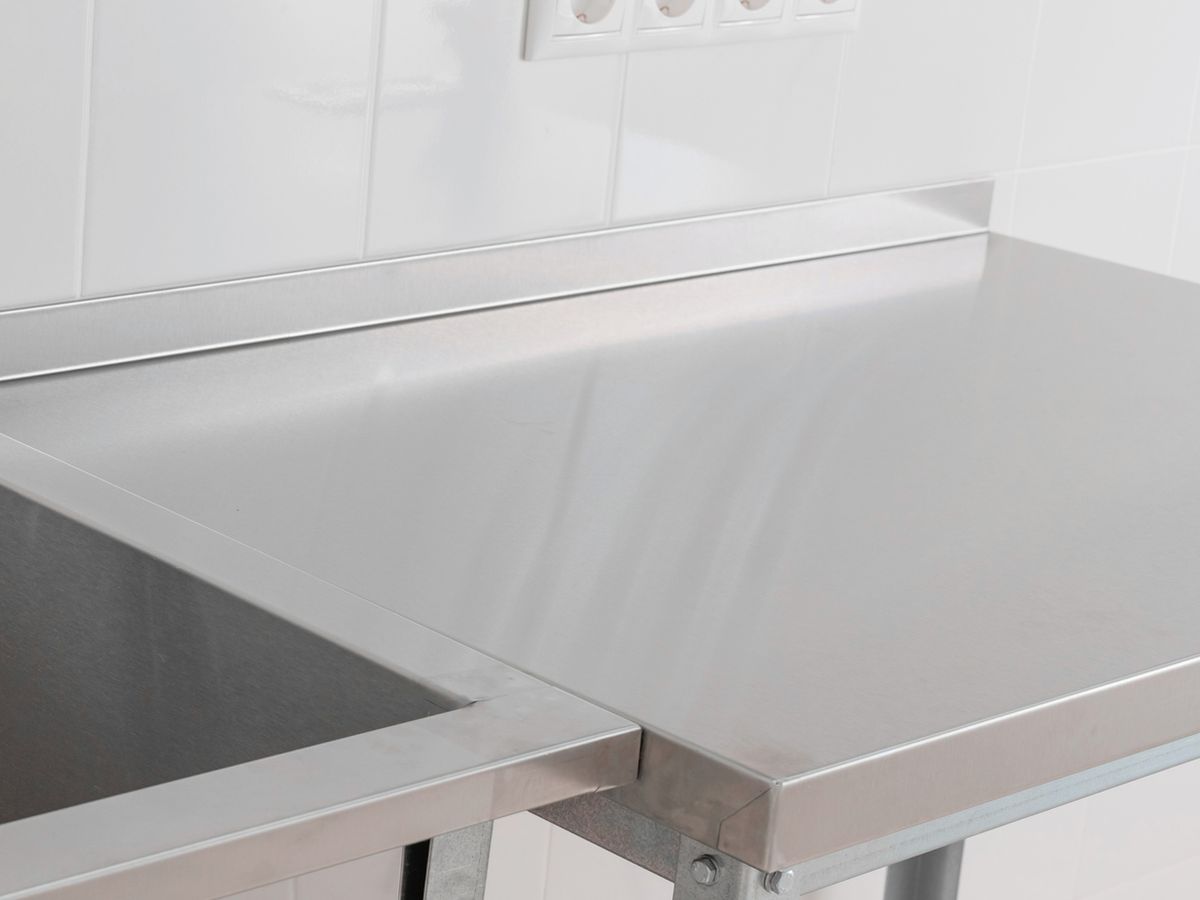
An undermount bowl gives a continuous surface to wipe into the bowl, with no rim for debris to catch on, and it is the cleaner answer for food preparation. A top mount is easier to replace and cheaper. In a fabricated stainless bench the bowl is typically welded in, which is neither of the domestic options and gives the best of both: no rim, and a permanent joint rather than a sealant line.
Where do the tap and waste go? Decided at the site measure, against the rough-in that actually exists. Tap positions, waste outlets and the fall of the discharge pipe all have to agree, and a bench fabricated before the rough-in is confirmed either gets remade or forces reworked plumbing in a finished room.
How Does the Sink Relate to the Bench?
That is a separate specification. Our stainless steel sink bench guide covers bench dimensions, gauge and the wall junction. This article is about the sink itself, and the two should not be blurred.
Placement in the workflow is in the commercial kitchen layout guide, and the wall surface behind it in the splashback comparison.
What Grade at the Sink?
304 as the baseline, 316 where chlorides bite
304 is the minimum for food contact surfaces. 316 where chlorides are present, which in practice means coastal venues and heavy chloride sanitiser regimes. Our food grade stainless steel guide covers what the term means and what to specify, and the 304 vs 316 guide covers the exposure thresholds.
Frequently Asked Questions
Can one sink do everything?
Not in a commercial kitchen. Hand washing needs a dedicated basin.
What is a three compartment sink?
Wash, rinse and sanitise in sequence, common in food service and required in some operations.
What is a pot wash sink?
A deep bowl sized for pots and trays, usually adjacent to the cook line.
Where does the dishwasher connect?
To the bench, with waste and supply coordinated at the measure.
Does the sink grade matter?
304 is the minimum for food contact surfaces, 316 where chlorides are present. See our 304 vs 316 guide.
Can you match an existing bowl?
Usually. Send a photograph with dimensions and we will confirm at the measure.
Book a Site Measure
Bowl configuration, tap positions and waste are set from the room, not from a plan. We fabricate at our Burpengary East workshop and install as part of a commercial kitchen fitout. Call 07 3888 7534.
Sink Benches Fabricated to the Room
Bowl configuration, drainer side and waste positions set from a site measure.