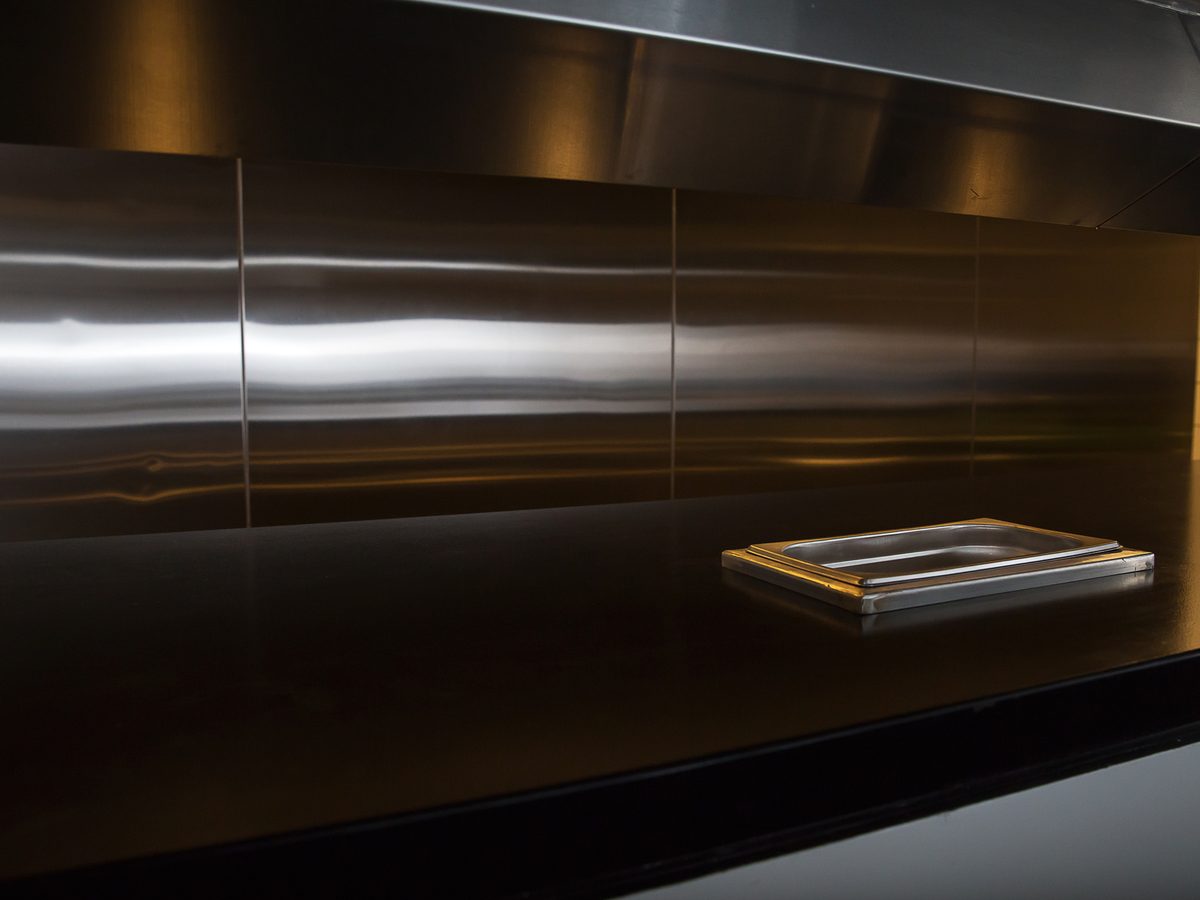
Food grade stainless means a grade and a surface finish suitable for food contact: in practice 304 as the minimum for preparation surfaces, 316 where chlorides are present, formed and finished so it can be cleaned. Grade alone does not make a surface food safe. The junction detail does as much work.
Is 304 Food Grade?
For preparation surfaces, yes, and it is the practical minimum. It resists corrosion in normal kitchen conditions and takes the finishes required for cleanability. Our stainless steel kitchen bench guide sets out why 304 rather than a lower grade is the baseline in a Queensland commercial kitchen.
When Do You Need 316 Instead?
Where chlorides are present in a way that attacks 304: coastal environments with salt air, heavy chloride sanitisers, seafood and wet processing, and some dairy. The chemistry is straightforward and our 304 vs 316 stainless steel guide covers it properly. The practical point is that 316 is not a marketing upgrade, it is a specification for a specific exposure.
Does Grade Alone Make a Surface Safe?
No. A 304 surface with a rough finish, a butted joint or a crevice is harder to clean than a well-formed 316 surface, and the standard is about cleanability rather than alloy alone. Smooth and impervious, formed rather than butted, no ledges. That is the direction AS 4674-2004 pushes, and our stainless steel kitchen bench guide describes how it applies to a bench run.
What Finish Should a Food Contact Surface Have?
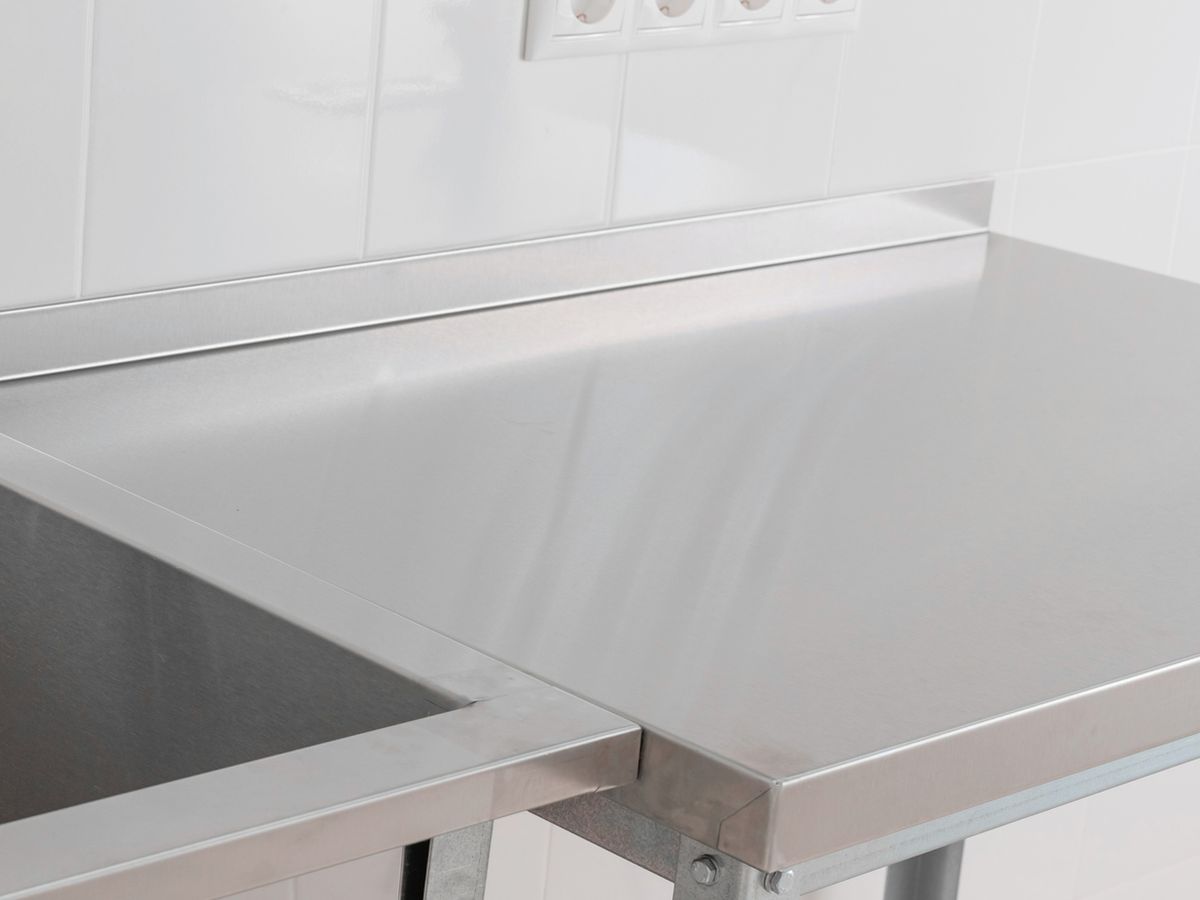
A fine directional grain, which is cleanable and repairable. Mirror looks cleaner and behaves worse, showing every mark and resisting invisible repair. The stainless steel finishes guide covers the trade-off in detail.
Where does food grade matter most? Preparation benches, sink benches, wall surfaces and shelving. Also in aged care and institutional kitchens, where the surface is in more or less constant contact, and our aged care and institutional fitout standards guide covers what else changes in those venues.
In wet processing the requirement rises again, and the seafood and wet processing kitchen guide covers the specifics.
What Food Grade Does Not Mean
There is no single food grade certificate in Australia
The term describes a suitable grade and finish for the application, not a badge. If a supplier offers you a “food grade certificate” for sheet metal, ask which grade and which finish it actually covers, and whether it says anything about how the joints are formed. The joints are the part that fails cleaning audits.
Frequently Asked Questions
Is 316 always better?
No. It is better where chlorides are the problem and unnecessary cost where they are not.
Is 18/10 food grade?
The 18/10 designation refers to chromium and nickel content in a specific family of grades. See our 18/10 stainless steel explainer.
Does food grade mean certified?
There is no single food grade certification in Australia. It means a suitable grade and finish for the application.
Can I use stainless for direct food contact?
Yes, formed and finished correctly, with formed junctions rather than butted ones.
What about aluminium or galvanised?
Neither is suitable for food contact surfaces in a commercial kitchen. See our stainless steel vs galvanised steel comparison.
Does the grade affect cleaning products?
Yes. Chlorinated cleaners attack 304, which is one of the reasons 316 exists. See our stainless steel cleaning guide.
Book a Site Measure
Grade, finish and junction detail are settled together at a measure. We fabricate custom stainless steel benches at our Burpengary East workshop in 304 and 316. Call 07 3888 7534.
Specify the Right Grade First Time
Tell us the exposure and we will tell you whether 304 is enough or the job needs 316.