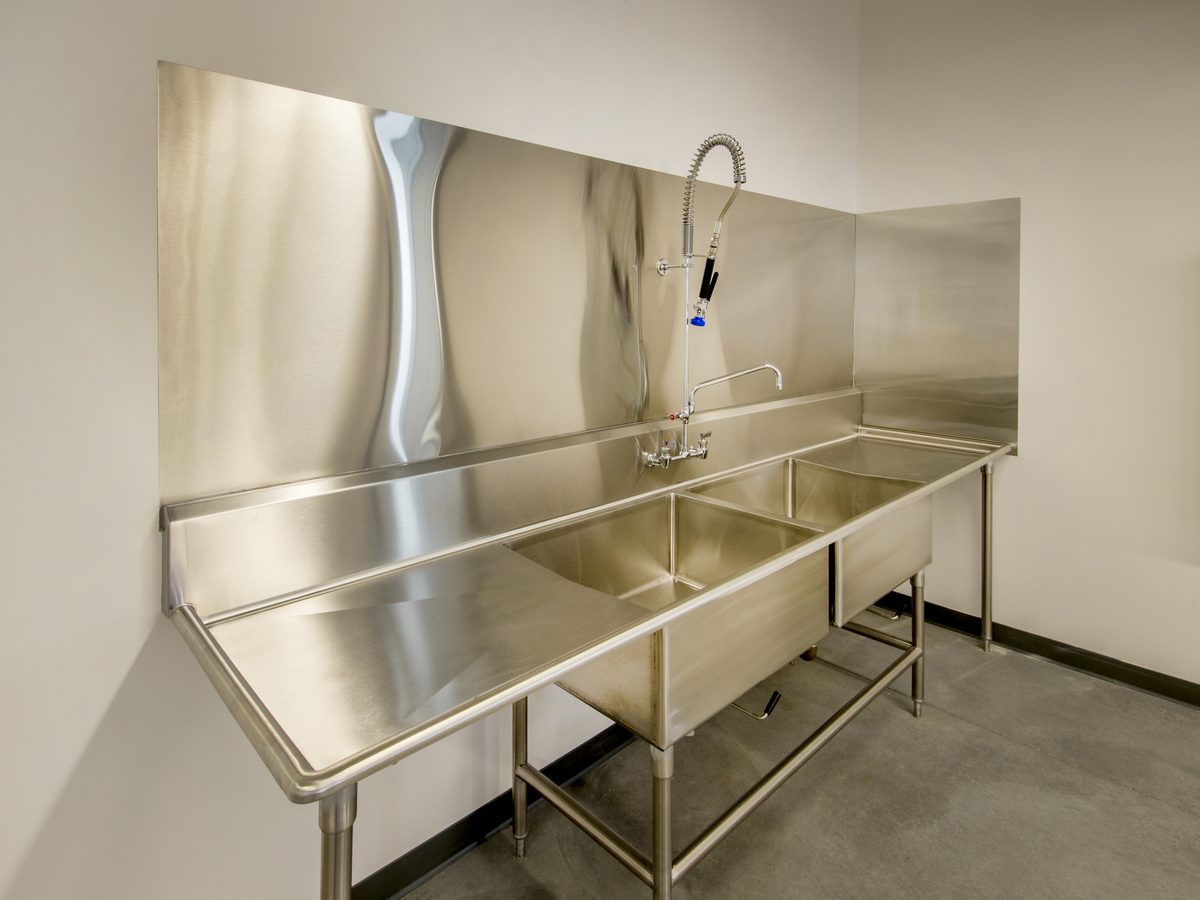
Seafood and wet fish processing rooms operate under more demanding conditions than a standard commercial kitchen: constant water exposure, chloride-heavy cleaning agents, brine and salt residue, and HACCP requirements that go beyond the standard AS 4674-2004 checklist. The commercial kitchen equipment in a wet processing environment must be specified for that environment, not adapted from a standard kitchen catalogue. A1 Custom Stainless & Kitchens fabricates 316 grade stainless steel processing benches, sink benches, wall cladding, and drainage systems for seafood businesses across Brisbane and South East Queensland. Call 07 3888 7534 for a free site measure.
What Makes a Seafood Processing Room Different from a Standard Commercial Kitchen?
A restaurant kitchen and a seafood processing room share the same regulatory framework — both fall under the Food Standards Code and AS 4674-2004 — but the operating environment is fundamentally different. The distinction matters because commercial kitchen equipment specified for a restaurant environment will fail prematurely in a seafood processing context.
The difference comes down to what every surface in the room is exposed to, every shift, without exception: continuous water and brine contact, salt and chloride from both the product and the cleaning agents, drainage intensity far higher than a standard kitchen, and a HACCP food safety plan that scrutinises surface materials, drainage design, and construction joins in a way a standard EHO inspection does not.
The Demands of Constant Water, Brine, and HACCP in a Wet Processing Environment
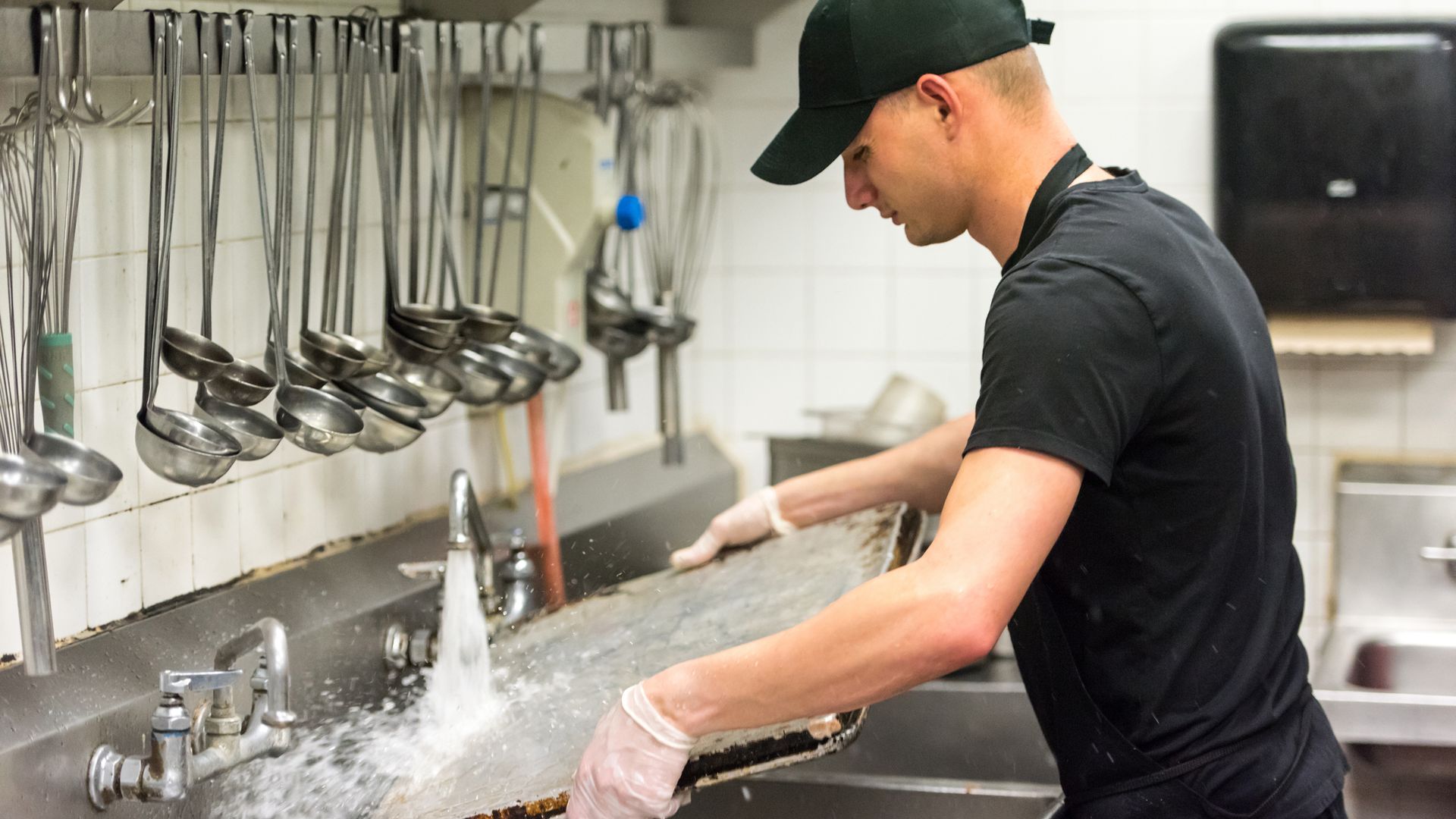
Wet fish processing involves continuous water use on every surface. Benches, walls, and floors are hosed down repeatedly throughout every shift, not wiped at end of service. Brine, salt-packed fish, and chloride-heavy sanitisers contact every surface daily. Chloride ions attack the passive oxide layer that gives stainless steel its corrosion resistance — and 304 grade, the standard for most commercial kitchens, provides insufficient protection against that level of chloride exposure.
Seafood processing businesses at commercial scale are typically required to maintain a HACCP food safety plan. That plan imposes requirements on surface materials, drainage design, cross-contamination separation, and harbourage elimination that go well beyond the standard EHO inspection checklist. A kitchen fitout that passes a restaurant inspection will not necessarily pass a HACCP audit for a seafood processing facility.
Typical applications that require a specialist seafood processing fitout in Brisbane include:
- Commercial seafood processing rooms in fish markets, wholesalers, and processors
- Seafood retail operations with on-site processing or portioning
- Restaurant and hotel kitchens with dedicated raw fish preparation rooms
- Aquaculture and export facilities handling marine product for sale
When Is a Specialist Fitout Required for a Seafood Processing Room in Queensland?
Every Queensland food business must comply with the Food Act 2006 and Food Standards Code Standard 3.2.3. Seafood processing businesses handling product for sale are additionally required to notify the relevant authority under Standard 3.2.2 and may be required to implement a documented food safety management system.
Queensland Health and local council EHOs inspect food premises at licence application and periodically during operation. In a seafood processing context, inspectors look beyond the standard surface cleanability checklist: drainage capacity, surface joins, penetration sealing, and the absence of harbourage points where fish waste or brine could accumulate between shifts. A fitout that passes a standard restaurant EHO inspection will not necessarily pass a seafood processing inspection. The tolerance for exposed joins, flat bench surfaces without drainage slope, and 304 grade in a high-chloride environment is significantly lower in a processing room.
Choosing the Right Grade: 304 vs 316
In a seafood processing room, 316 grade is not a premium option — it is the minimum correct specification. 304 grade performs well in environments where chloride exposure is incidental. In a seafood processing room, chlorides are present continuously: in the product, in the cleaning agents, and in the hose-down water. 304 in that environment will pit and corrode within years, not decades.
Pitting corrosion creates surface voids that cannot be effectively cleaned, cannot be made smooth again without replacement, and will fail both a HACCP audit and an EHO inspection. Replacing corroded benching and wall cladding costs significantly more than specifying 316 at the outset. 316 contains approximately 2 to 3 percent molybdenum, which dramatically improves resistance to chloride attack. Every bench, sink, wall panel, and drainage component in a seafood processing room should be specified in 316. For the full grade breakdown, see our stainless steel grades guide.
Drainage Slope, Hose-Down Bench Design, and Wall Coving
Processing benches in a wet room are fabricated with a deliberate fall of approximately 1:60 toward a drainage channel or waste outlet integrated into the bench surface. This prevents water and fish waste pooling during processing. The drainage outlet position, direction of fall, and waste connection are specified before fabrication begins and cannot be retrofitted to a finished bench.
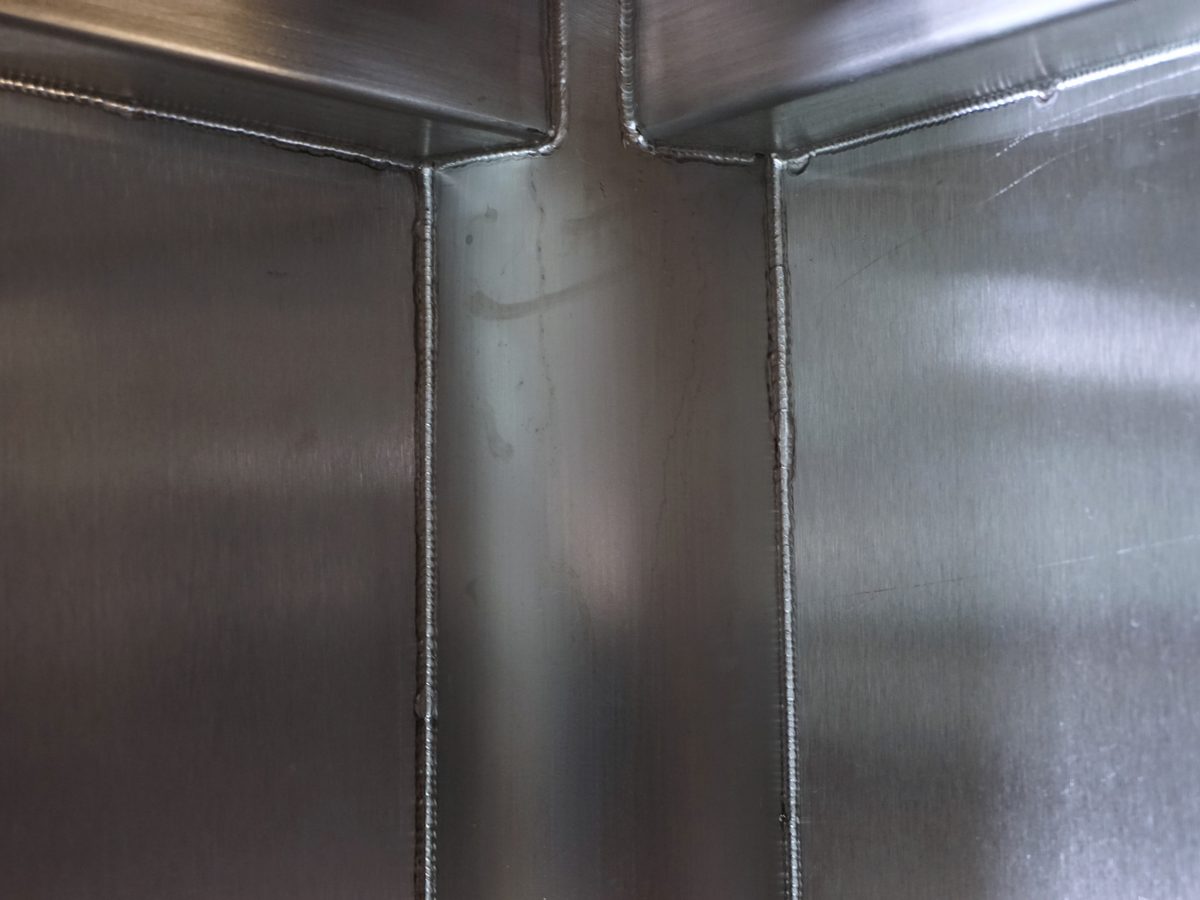
Benches in a hose-down environment need no horizontal crevices where water and organic matter can collect, no unsealed joins between bench sections, and no hollow sections that trap moisture. Integrated construction — bench, drain board, and sink fabricated as a single welded unit — eliminates the joins that create hygiene problems in a wet environment.
The junction between wall cladding and the floor in a seafood processing room should be coved rather than square-jointed. A coved junction has no 90-degree corner for fish waste, blood, or cleaning solution to accumulate in. It is a HACCP requirement in most processing environments and an EHO expectation in Queensland seafood premises inspections.
How Much Does a Seafood Processing Fitout Cost in Brisbane?
Seafood processing fitouts cost more than equivalent standard commercial kitchen fitouts, primarily because of the 316 grade premium and the additional fabrication involved in drainage slope, coving, and sealed construction throughout.
The main cost drivers are the same as any stainless steel fabrication scope — linear metres of benching, wall cladding area, number of integrated sinks, and duct run for any exhaust canopy — but the 316 material premium adds cost across every element. Custom drainage slope fabrication and coved wall junctions add fabrication time beyond a standard bench installation.
Be wary of seafood processing fitout quotes that do not specify 316 explicitly. A quote in 304 will be lower. It will also require replacement in a fraction of the time. For a full overview of custom fabrication for specialty food processing, see our custom stainless steel products Brisbane page.
How a Seafood Processing Fitout Works Alongside Your Other Equipment
Seafood processing fitouts regularly include more elements than benching and wall cladding alone. Exhaust extraction is required where cooking or hot processing takes place. Coolroom linings in 316 are common where the coolroom is exposed to the same brine and salt environment as the processing room. Floor waste grates and drainage grate specification are coordinated with the bench drainage slope direction.
When benching, wall cladding, and exhaust canopy are all in one fabrication scope, a single site measure covers every element. Drainage slope direction and waste outlet position are coordinated with the floor drain location. Grade is consistent throughout. For the bench and sink bench scope, see our stainless steel benches Brisbane page. For exhaust canopy sizing in a processing environment, see our commercial exhaust canopies Brisbane page.
Frequently Asked Questions
Does a seafood retail display counter need 316 grade?
If the display counter is in a coastal environment or is regularly cleaned with chloride-based sanitisers, 316 is the safer specification. The additional cost of 316 over 304 is modest compared to the cost of early replacement in a high-chloride retail environment.
Can existing 304 benching be retrofitted to handle a wet processing environment?
No. Grade is a property of the steel itself and cannot be changed after fabrication. If existing 304 benching is already showing pitting or surface corrosion in a wet processing context, replacement in 316 is the only correct solution.
Is coving a legal requirement in Queensland seafood processing rooms?
Coving is a HACCP requirement in most processing environments and is referenced in AS 4674-2004 as a design standard for food premises. It costs very little to include in a new fitout and significantly more to add retrospectively. Specify it from the start.
Do you fabricate single-piece hose-down benches with drainage slope?
Yes. Benches with integrated fall, drain board, and waste outlet fabricated as a single welded unit are part of our standard fabrication scope for wet processing environments. Drainage slope direction and outlet position are confirmed at the site measure.
Do you service seafood businesses outside Brisbane?
Yes. A1 Custom Stainless & Kitchens services Brisbane, Moreton Bay, Gold Coast, Sunshine Coast, Ipswich, and Logan from the Burpengary East workshop.
How long does fabrication take for a seafood processing fitout?
From a completed site measure and signed-off fabrication drawing, lead time is typically two to three weeks depending on scope and workshop schedule. Confirm the lead time with your quote so it can be built into your construction programme.
Book a Site Measure for Your Seafood Processing Fitout
A1 Custom Stainless & Kitchens fabricates and installs 316 grade stainless steel processing benches, wall cladding, sink benches, and drainage systems for seafood and wet processing businesses across Brisbane and South East Queensland from our workshop in Burpengary East. We hold a QBCC licence and use our own team for every installation. Book a site measure and we will quote from your actual processing room and confirmed 316 grade specification. Call 07 3888 7534 or request a quote online.
Free Site Measure — Seafood and Wet Processing Fitouts Brisbane
Book a site measure and we will quote from your actual space and confirmed 316 grade specification.